
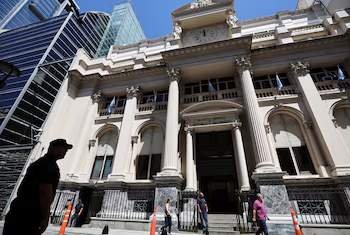
The Central Bank’s Significant Dollar Acquisition
The Central Bank of the Argentine Republic (BCRA) made headlines this Tuesday by purchasing USD 532 million, marking the largest acquisition during Javier Milei’s administration and the highest since December 2022. This move brings the total dollar purchases in 2026 to over USD 12 billion, resulting in a remarkable 126 consecutive days of positive acquisition balance in both the official and free exchange markets.
Reasons Behind the Acquisition
Official sources attribute this substantial purchase of dollars to the settlement of a negotiable obligation (ON) and a significant supply in the Free Exchange Market (MLC). These factors were timely leveraged by the BCRA to bolster international reserves. This strategic decision reflects the central bank’s ongoing efforts to stabilize and enhance Argentina’s financial landscape.
Achievements in the Monetary and Exchange Program
On the heels of phase four of the monetary and exchange program initiated in January 2026, the BCRA, under the leadership of Santiago Bausili, has accumulated total acquisitions of USD 12.267 billion. This figure exceeds the initial target set by the economic team, which aimed for a range between USD 10 billion and USD 17 billion by the end of the current year.
Factors Contributing to Dollar Supply
The increase in foreign currency supply has been significantly supported by liquidations from the agro-export and energy sectors, as well as by local companies and provincial debt placements in international markets. In the first seven months of 2026, these sources have provided a strong influx of foreign currency, enabling the BCRA to secure a large portion of these funds.
Context of the Current Acquisition
The recent USD 532 million acquisition surpasses the USD 468 million purchased in April 2024. For a perspective on the scale of this transaction, one would need to look back to December 29, 2022, when the Export Increase Program (PIE), colloquially referred to as the “soy dollar,” was active. This initiative, launched under former President Alberto Fernández, aimed to incentivize foreign currency settlements from the agricultural sector.
Sector Performance and Future Outlook
According to reports from the Chamber of the Oil Industry of the Argentine Republic (CIARA) and the Center of Cereal Exporters (CEC), companies in the sector settled USD 3.007 billion in June 2026, reflecting a 12% increase from May. However, the year-to-date figures indicate an annual decline of 13% compared to the same period last year, with total amounts reaching USD 13.378 billion.
In summary, the BCRA’s recent transaction certainly underscores a strategic approach to addressing Argentina’s complex economic challenges, bolstering reserves while navigating the global market’s uncertainties. As developments continue to unfold, stakeholders will be keenly observing these monetary maneuvers and their implications for the country’s financial stability.
News in development…