
Joaquín Levinton’s “Wonderwall” Reimagined: A Musical Battle Cry
The Impact of a Football Anthem
The recent adaptation of “Wonderwall” by Joaquín Levinton has captured the attention of football fans worldwide, particularly in Argentina. This reimagined version comes ahead of the highly anticipated semi-final match between Argentina and England in the 2026 World Cup. Levinton, the lead singer of the band Turf, has transformed this iconic song into a passionate tribute filled with patriotic fervor and a nod to Argentina’s footballing history.
Lyrics that Resonate
Levinton’s version makes direct references to past confrontations between the two nations, echoing sentiments from the infamous 1986 World Cup. He boldly states, “English, I tell you that you are out of the World Cup again. Like in Mexico ’86, we are going to beat you again.” These lyrics resonate deeply with Argentine fans, weaving in themes that reflect national pride and historical moments.
Moreover, the chorus includes poignant lines like, “For the Malvinas, for our fallen, for forty million Argentines,” showcasing the emotional weight behind the music. The mention of Diego Maradona and Lionel Messi serves to unite generations of football lovers, reinforcing the idea that this isn’t just a sporting event but a cultural milestone.
Viral Sensation on Social Media
Levinton’s reinterpretation quickly became an anthem among Argentine supporters, spreading like wildfire across social media platforms. Fans praised his creativity, with reactions ranging from admiration for his talent to humor about Gallagher’s original song. Comments such as, “You are so rude. You went too far,” highlight the playful engagement surrounding this lyrical duel.
Some fans even suggested that Liam Gallagher should respond with a version of his own. One witty comment stood out: “Now Liam should do his version with ‘Steps to the Side,’ let’s see if he can do it.” This interaction highlights the friendly rivalry and connection between the two cultures.
Liam Gallagher’s Endearing Dilemma
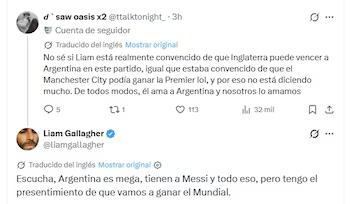
The cultural exchange heated up when Liam Gallagher himself weighed in. Just days before the match, he expressed his conflicted feelings about supporting Argentina while still rooting for England. His tweet read, “It’s hard to be here loving Argentina and all its beautiful people, but without wanting them to win.” This admission opened up a playful exchange between fans from both nations and showcased Gallagher’s sincere affection for Argentinian culture.
In another interaction, one Twitter user noted, “I was ready to fight Liam over Argentina vs. England, and now he chooses peace?” Gallagher humorously replied, “I’m scared,” further solidifying a connection that transcends football rivalry.
The Significance of “Wonderwall”
The choice of “Wonderwall” as the musical basis for Levinton’s version isn’t merely coincidental. The song has taken on a life of its own as an unofficial anthem for the English team during the World Cup. Initially sung following England’s victory over Croatia, it has become a staple that evokes unity and joy among fans—a testament to the song’s emotional resonance.
By taking this melody and infusing it with Argentine spirit, Levinton has created a powerful statement that adds layers of cultural significance to the match. In this intense sporting landscape, music has once again demonstrated its ability to unite and inspire, paving the way for a unique showdown that merges sport and art.
Conclusion
As the football world turns its eyes to the clash between Argentina and England, Joaquín Levinton’s adaptation of “Wonderwall” serves as more than just a song; it’s a heartfelt battle cry. Both artists and fans engage in a cultural dialogue that elevates the sporting event into a celebration of identity, memory, and a shared love for the game.