
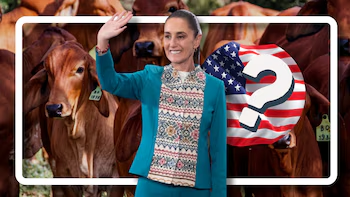
Sheinbaum Critiques US Border Closure Decision
Claudia Sheinbaum, the Mexican President, has publicly condemned the unilateral decision made by the United States to close its border to the importation of Mexican livestock. She emphasizes that this measure negatively impacts not only the national livestock sector in Mexico but also affects ranchers in the US.
Effects on the Livestock Sector
During a recent conference, Sheinbaum articulated the immediate consequences of this border closure, pointing out the significant increase in meat prices across both nations. The closure, particularly affecting regions like Sonora and Chihuahua where no cases of the screwworm plague—responsible for the sanitary measure—have been detected, has severely limited export opportunities for Mexican ranchers. She insisted that the economic distortion brought on by this closure is unsustainable for both countries.
Support Measures from the Mexican Government
In response to this crisis, the Mexican government is implementing support measures for the affected producers. Notably, the establishment of a sterile fly production plant aims to combat the infestation of screwworms. These efforts are geared toward demonstrating to US authorities that conditions for reopening trade exist and that collaborative measures are being taken to safeguard the livestock population.
Binational Impact of the Border Closure
Sheinbaum stressed that the repercussions extend beyond Mexican ranchers, affecting US producers who rely on Mexican cattle for their meat production. “The closure also affects ranchers in the United States,” she reiterated, highlighting the interconnectedness of the agriculture markets in both countries. The reopening of the border remains contingent upon decisions made by Washington, but Sheinbaum assured that diplomatic channels are active.
Additional Challenges: Illegal Cattle Trafficking
Adding complexity to the situation is the challenge of illegal cattle trafficking across Mexico’s southern border. This illicit trade not only exacerbates the spread of the screwworm but also introduces additional zoonotic diseases such as tuberculosis, foot-and-mouth disease, and avian flu. Recent studies suggest that the clandestine movement of infected livestock could significantly hinder efforts to control the screwworm pest and exacerbate its spread into wildlife, putting additional strain on regional ecosystems.
Epidemiological Monitoring and Future Steps
Despite the challenges posed by illegal trafficking, the Mexican government remains committed to enhancing health surveillance. Collaborative efforts with US as well as Panamanian authorities aim to establish effective pest control strategies and reinforce the safety of livestock trade.
Claudia Sheinbaum reiterated that the primary objective is to eradicate the screwworm and facilitate the reopening of the border for livestock exports. She maintains that formal trade is necessary for both economic stability and public health. As long as border restrictions persist along with illegal trafficking, the dual health and commercial issues will remain unresolved.
Conclusion
The ongoing border closure not only disrupts trade but poses broader threats to agriculture and public health on both sides of the border. Claudia Sheinbaum’s actions and critiques spotlight the urgent need for a coordinated and effective approach to managing health crises while ensuring economic stability in both Mexico and the United States. It remains to be seen how these challenges will unfold as negotiations and health measures progress.