
On October 6, 1998, 16 city councils, four regional councils, the two municipal associations of Catalonia, three chambers of commerce, and other entities from various fields formed a unified front to reduce and rationalize tolls. Their ultimate goal was to align the toll situation in Catalonia—characterized by multiple payment methods—with that of the rest of Spain. This initiative was articulated in a 10-point manifesto known as the Gelida Declaration, which opposed the latest agreement reached among the Spanish Ministry of Development, the Generalitat, and the concessionaire Acesa. Under this agreement, exploitation concessions were extended until 2021, though the concessionaire did agree to lower the toll amounts.
This narrative is highlighted in an article from The Newspaper, titled AP-7: History of a Business and a Claim, published in 2019. The piece chronicled the two-decade-long battle by various councils and organizations demanding the lifting of barriers on the AP-7 highway, where drivers had been paying tolls since sections of the highway opened in the 1970s and early 1980s.
The situation intensified with the concession extension until 2021, leading to public protests where drivers actively refused to pay tolls on the AP-7. Fast forward to 2021, the scenario shifted dramatically. The concession expired; barriers were raised, and cars no longer halted at toll booths. Yet, this change came with significant repercussions, leading many to reconsider the implications of the toll-free highway.
Traffic Woes without Tolls
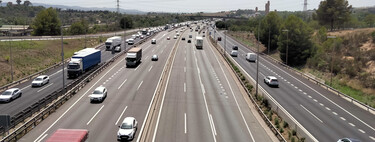
The transition to a toll-free AP-7 rapidly resulted in a surge of traffic. In its initial year without tolls, car volumes increased by 40%, while truck traffic skyrocketed by 80%, as reported by The Country. The road, particularly at key junctions in Barcelona and toward the French border, became inundated with trucks, creating slower and more dangerous travel conditions.
By the end of that first year without tolls, the AP-7 accounted for a staggering 20% of all traffic accidents recorded in the entire autonomous community of Catalonia.
Recognizing these challenges, various organizations have been advocating for solutions. Manel Nadal, Secretary of Mobility and Infrastructure, recently voiced a proposal indicating that tolls could be reintroduced on the AP-7 in “two to three years” if there’s public support. He also suggested extending tolls to other high-capacity roads to alleviate the funnel effect currently experienced due to the complete accessibility of this highway for transport companies heading to France.
The Future of Tolls in Catalonia
Amid these discussions, Catalonia’s president, Salvador Illa, has reflected on the previous push to eliminate tolls by suggesting, “perhaps we were wrong when we all asked for them to disappear.” Nadal has indicated that a Swiss-style Eurovignette system, where a flat annual rate allows drivers to use toll roads, is unlikely to gain acceptance from Europe after 2032.
Europe has been pressing Spain for a long time to convert free roads into toll roads. Although the financial implications have made immediate changes difficult, Spain’s government has been contemplating this shift for over a decade.
Meanwhile, traffic authorities are attempting to manage the current situation by reducing speed limits in certain areas and exploring dynamic speed limits via the Servei Català de Trànsit (SCT). These dynamic limits would adjust based on real-time traffic conditions, helping to mitigate congestion and improve safety.
As discussions around recovery of tolls and traffic management continue, Catalonia’s roadways find themselves at a critical crossroads, where past engagements and future strategies will shape the landscape of transportation in the region.
Photo | Pere Lopez Brosa and Wikimedia