
The Dismantling of a Sophisticated Immigration Scam Network
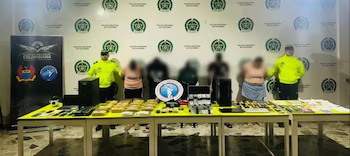
A recent operation in Ibagué has unveiled a sophisticated international immigration scam network utilizing artificial intelligence to deceive victims across multiple countries. This elaborate scheme was revealed thanks to a collaborative effort by Colombian and American authorities.
How the Scam Operated
More than one hundred fake social media profiles were used to lure victims seeking immigration assistance. The criminals promised to facilitate visas and residence permits for interested individuals from countries including Costa Rica, Ecuador, Guatemala, Honduras, Mexico, Peru, and the United States. They employed advanced technological tactics, including video calls where their faces were artificially altered using AI, to enhance credibility.
The network relied on multiple fraudulent documents and tailored messages for potential victims. During initial contacts, automated systems and chatbots were deployed, making the scammers appear more legitimate.
Law Enforcement’s Action
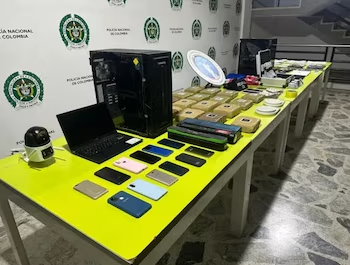
The law enforcement operation, which resulted in the capture of five individuals, included the execution of three simultaneous raids on properties used as clandestine centers for the scams. The investigation was spearheaded by the Directorate of Criminal Investigation and Interpol, alongside the Attorney General’s Office. Assistance also came from both the Colombian Aerospace Force and the American Center Against Cybercrime.
A significant finding was the use of artificial intelligence, which allowed the criminals to convincingly impersonate U.S. consular officials. They utilized DeepFace technology to alter their appearance and voice during interactions, which made their fraud schemes more believable.
The Evidence Collected
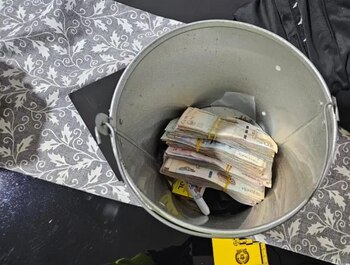
Authorities seized 105 pieces of evidence during the raids, including over 330,000 counterfeit dollars intended to bolster the deception. The operation also uncovered 13 million pesos in cash, fake checks, several technological devices, and fraudulent documents.
Investigators found nine counterfeit U.S. government documents and other materials that contributed to the network’s facade of legitimacy. This included immigration guides, notebooks with pertinent information, and even a United States government uniform.
Conclusion and Future Implications
This operation has shed light on the grave complexities of modern-day immigration scams, particularly those backed by advanced technology. The individuals arrested face serious charges, including personal data violations and trafficking in counterfeit currency. As authorities continue to investigate further, the dismantling of this network serves as a significant step toward combating such deceptive practices on a global scale.