
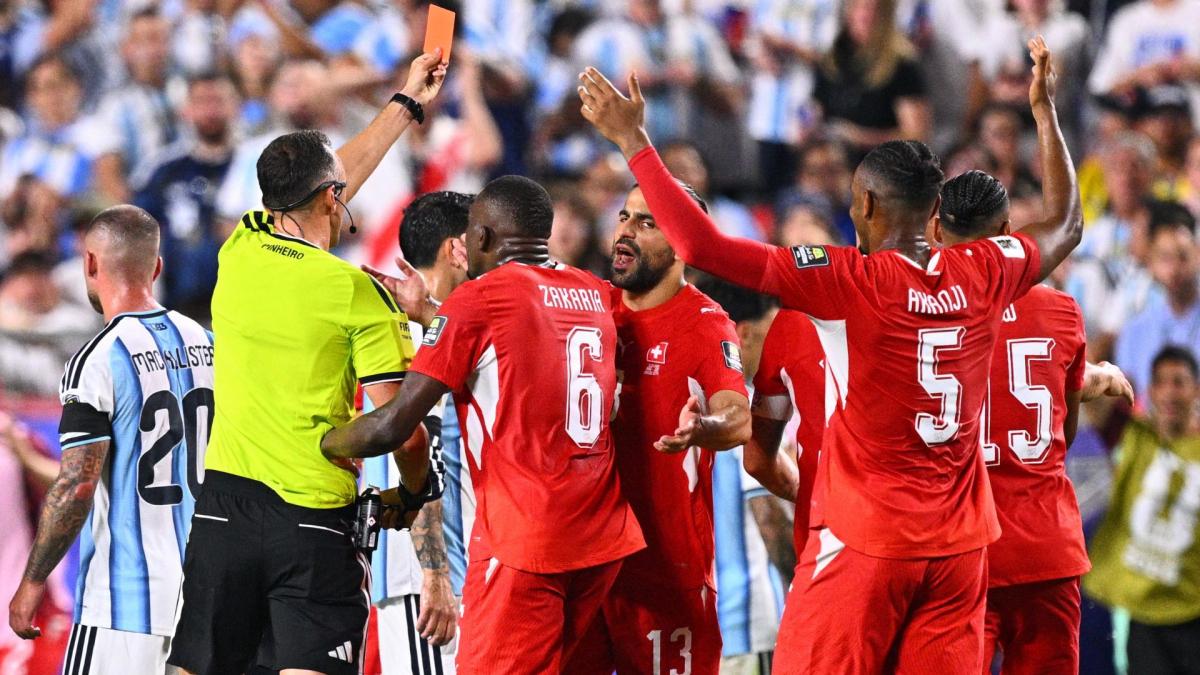
Messi’s Standoff with Referee João Pinheiro
In a high-stakes quarter-final match against Switzerland during the 2026 World Cup, Lionel Messi once again showcased his leadership and competitive spirit. The incident occurred in the 42nd minute when the Argentina captain confronted Portuguese referee João Pinheiro, expressing his dissatisfaction with the referee’s attitude. “Speak to me with respect, don’t be disrespectful. I spoke to you with respect,” Messi stated emphatically, a moment that quickly gained traction across various social media platforms.
The Context of the Confrontation
This confrontation was more than a typical dispute over a possible foul or assistance regarding the game flow. Messi’s critique aimed to highlight a broader issue regarding respect on the pitch. It became apparent that his frustrations were directed not just at the call itself but rather at the tone and demeanor with which Pinheiro addressed the Argentine players. Much of the Argentinian media emphasized that Messi’s approach demonstrated not only calmness but also the authority expected of a captain during such crucial moments in high-pressure games.
Understanding Messi’s Reaction
According to sports analysts, Messi’s reaction was indicative of a leader who values mutual respect among players and officials alike. The incident underscores an essential aspect of competitive sports: the need for impartiality and professional conduct from referees. The captain’s insistence on being treated favorably resonated not only with his teammates but also with fans, who increasingly expect a standard of respect on and off the field.
Media Reaction
In coverage of the incident, Argentinian outlet Clarin remarked that Messi, with both calmness and firmness, set necessary boundaries for the referee. This moment served as a reminder of Messi’s character—both as an elite athlete and a guiding figure for his squad, especially in a World Cup setting where emotions run high.
The Impact on Argentina’s Campaign
This incident is significant not just for its immediate ramifications but also for how it could influence Argentina’s performance in the tournament. With Messi at the helm, the Argentine team seems empowered to advocate for themselves. Players often draw energy from their leaders, and Messi’s assertiveness may bolster team morale as they navigate the challenges of the knockout stage.
Conclusion: A Moment of Leadership
Lionel Messi’s confrontation with referee João Pinheiro during the quarter-final against Switzerland transcended an ordinary dispute; it illustrated the importance of respect in sports. Fueled by eagerness to lead his team and maintain professional integrity, Messi elegantly set the tone for what is expected on the field. As Argentina proceeds in the 2026 World Cup, incidents like these can serve as rallying points that reinforce the squad’s unity and resolve, forging a path toward potential glory in the tournament.