
Earthquakes in Venezuela: The Challenges Faced by Rescuers in La Guaira
The Scene of Devastation
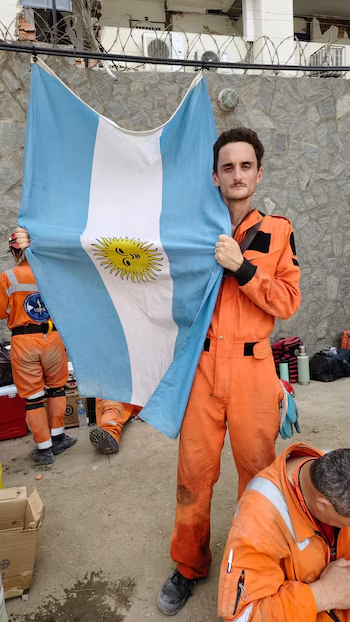
Following a double earthquake on June 24, the residential complex OPP 25 in La Guaira, Venezuela, became the epicenter of a tragic recovery operation. Christian Luccisano, who arrived in La Guaira last Friday, is part of the Evacuation and First Aid Corps (CEPA) of Argentina. Alongside his colleague, Esteban Chalá, president of the organization, they grapple with the heart-wrenching task of recovering the bodies of victims from a collapsed 14-story building. The disaster struck during a children’s party, amplifying the tragedy.
The Role of CEPA
CEPA is a volunteer organization specializing in humanitarian assistance, undeterred by politics, ethnicity, gender, or creed. Comprising over 60 dedicated volunteers from cities like La Plata and Buenos Aires, they have spent grueling hours—often between 10 and 14 daily—within the rubble. The building complex housed not just apartments but also a market and a salon, making the scale of devastation even more poignant.
From Hope to Heartbreak
Initially, neighbors managed to rescue some individuals. However, as days passed and the conditions worsened, the likelihood of finding more survivors dwindled. As of now, Esteban Chalá notes that the focus has shifted from rescue to retrieval—approximately 70 bodies are believed to still be entombed beneath the ruins. “There were mothers hugging their babies,” he reflected, conveying the deep emotional toll on both rescuers and families.
Personal Connections and Motivations
Christian Luccisano, the logistics coordinator for CEPA, is personally invested in this mission. His wife is Venezuelan, and he was prompted to engage in humanitarian work because of his connection to the community. “Everyone’s task here is to come and put their hands in the rubble… but since our arrival, it has been largely about returning bodies to relatives,” he said poignantly.
Emotional Toll on Rescuers
Each day brings a “seesaw of emotions” for Luccisano, balancing the satisfaction of helping families with the harsh realities of death and loss. He described a moment of overwhelming grief when confronting the remnants of families—musicians, children, and everyday lives lost to the disaster. Such encounters have taken a toll on his mental well-being, with Luccisano having to step back for two hours after witnessing particularly distressing scenes.
Challenges of Nighttime Operations
As the sun sets over La Guaira, the work becomes increasingly perilous. Poor visibility and risks of further collapses complicate the rescue efforts. Luccisano notes the struggle to breathe amid crushed concrete, emphasizing the dangers that loom as they navigate the chaotic landscape. The teams work tirelessly alongside anxious relatives, who stay close by, often seen painstakingly moving rubble in hopes of finding their loved ones.
The Path Forward
While hopes of finding more survivors are nearly extinguished, rescuers maintain a flicker of optimism. “We never rule out a miracle,” Luccisano said, albeit acknowledging the daunting conditions. The situation is dire, with soaring temperatures and extensive crushing leading many to believe that the window for survival has closed.
Conclusion
The work being done by CEPA in La Guaira is not just a testament to the resilience of volunteers but also a reflection of the profound human spirit in the face of unimaginable loss. As they continue their somber mission, the stories of those affected underscore the urgency for resilience and recovery in the wake of disaster.