
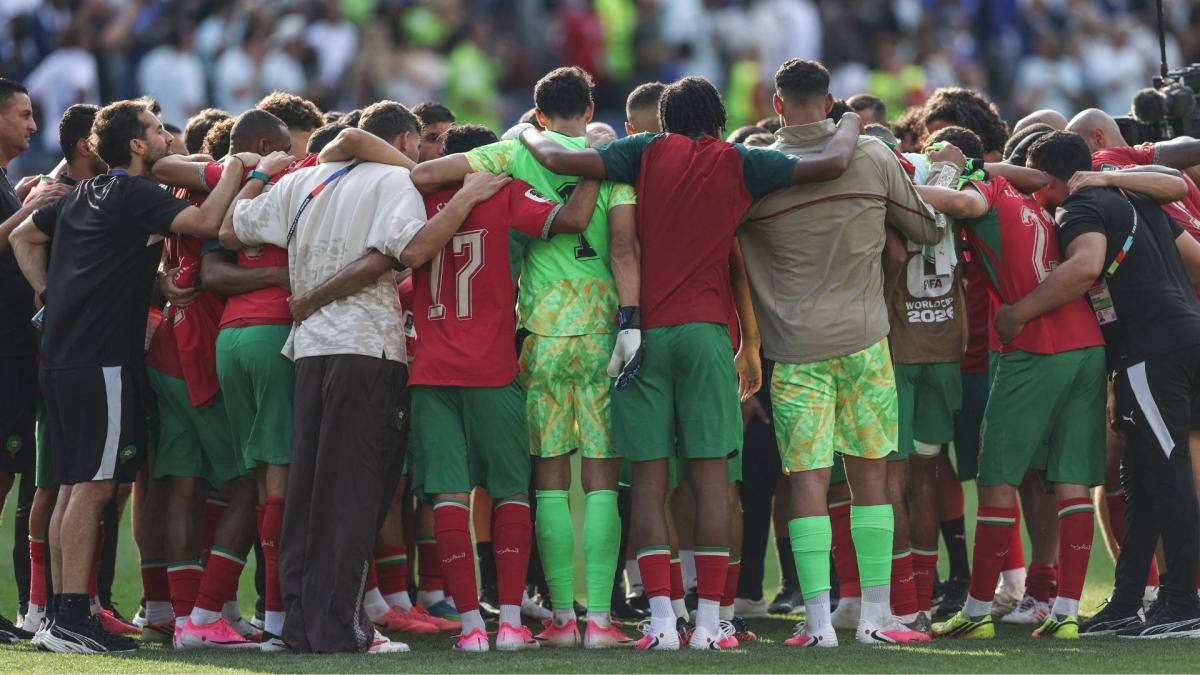
## Morocco’s Quarter-Final Exit: An Opportunity or a Regret?
Morocco’s journey in the 2026 World Cup came to an end in the quarter-finals, as they faced a 2-0 defeat against a formidable French squad. Despite their valiant efforts, the Atlas Lions appeared to struggle in translating their defensive solidity into effective offensive play. But can they genuinely feel disappointed after this elimination, or should they focus on the positives of their performance in the tournament?
### A Defensive Display, But Offensive Lapses
In the match, Morocco’s defense showed resilience for parts of the game. However, their offensive performance was underwhelming, with only five shots and a mere one on target, resulting in a total Expected Goals (xG) of just 0.14. This lack of offensive creativity left many spectators disappointed, particularly those who hoped for a more compelling challenge to the French team. Observers felt that Morocco’s attacking intentions lacked the necessary risk and dynamism, likely influenced by the sheer quality of the opponents they faced.
### Contextual Challenges
It’s crucial to recognize the context surrounding Morocco’s performance. Head coach Mohamed Ouahbi had to navigate significant challenges, including the absence of key players due to injuries. The loss of Chadi Riad, a strong central defender, required a tactical reshuffle, moving Noussair Mazraoui from the left flank to a central role. This adjustment undoubtedly affected the team’s balance and coherence on the field, inhibiting their ability to launch effective offensive plays.
### The Offensive Shortcomings
Moreover, the absence of Ismael Saibari, Morocco’s top scorer in the tournament, proved to be a crucial blow. Saibari’s technical prowess and ability to hold possession created valuable opportunities for the team. Without him, Morocco found it increasingly difficult to retain the ball under pressure, rendering them vulnerable to France’s counter-attacks. The Moroccan side often surrendered possession too quickly, which hindered their ability to mount any serious threats against the French goal.
### Regrets or Realistic Expectations?
While some might argue that Morocco could harbor regrets about their performance, several factors need to be considered. The scoreline doesn’t reflect a lack of effort or skill; it highlights Morocco’s ongoing journey toward being competitive at the highest levels of football. It’s imperative to remember that reaching the quarter-finals for the second consecutive World Cup is an impressive achievement, solidifying Morocco’s reputation among the elite football nations.
### Looking Ahead to Future Competitions
Ultimately, while the elimination against a superior French team may sting, it does not overshadow the foundations Morocco has built throughout the tournament. This experience has equipped the Atlas Lions with invaluable lessons and insights to take into future competitions. Their performance in the 2026 World Cup serves as a testament to their growth and ambitions in international football.
In conclusion, Morocco’s exit may lead to some frustrations regarding specific aspects of their game, but it should predominantly be viewed as an opportunity for growth and reflection. With their current trajectory, Morocco is positioned to aim even higher in upcoming tournaments.