
The Silent Threat Beneath the Waves
“There is no life down there.” For decades, this phrase suggested an eerie tranquility over the giant landfill of radioactive drums abandoned at the bottom of the Atlantic Ocean. However, as the ongoing Nodssum Project reveals, there is indeed life—and this toxic legacy threatens its existence. Situated nearly 300 nautical miles from Cape Fisterra in Galicia, this area is now under scrutiny as scientists embark on crucial expeditions to assess the environmental impact.
Alarm Bells Ringing
Recent French scientific missions have debunked the myth that the radioactive barrels lie undisturbed. They’ve discovered that only a fraction of the estimated 220,000 barrels has been located, with only 3,500 confirmed and the rest still lost in the depths, potentially spreading their lethal contents throughout the ocean currents. Researchers from the Centre National de la Recherche Scientifique (CNRS) now confirm these barrels are in an “advanced state of deterioration.”
A Cemetery Under the Atlantic
The history of this catastrophic situation traces back to 1946, when European countries—including Britain, France, and the Netherlands—began dumping low to medium-level radioactive waste into the Atlantic. Accumulating in an area of approximately 10,000 square kilometers at depths of 4,000–5,000 meters, this landfill is the third largest known nuclear waste site on Earth.
Inside these barrels are not fuel rods but rather civil and military waste: laboratory equipment, contaminated medical remains, and other hazardous materials encapsulated in cement or tar. Initial mapping efforts documented less than 1% of the total, emphasizing the immense scale of the problem.
Public Outcry and Moratorium
In the 1990s, awareness of these practices began to shift public opinion. A notable incident involving two freighters dumping waste attracted media attention, sparking protests that led to the European authority enforcing a moratorium on discharges, which remains in effect today.
The NODSSUM Campaign: Making the Invisible Visible
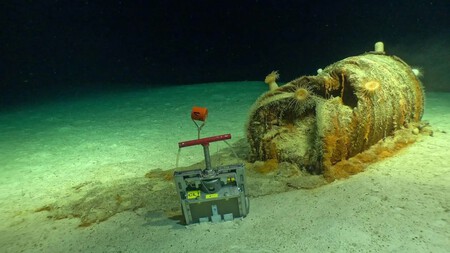
The first NODSSUM expedition aimed to uncover the unseen hazards. Over the past decade, mapping efforts have expanded to 140 square kilometers, revealing about 20 barrels per square kilometer. The introduction of the Nautile manned submarine provided much-needed visibility into the degraded state of these containers, with visible corrosion and even biological colonization on their surfaces.
Rising Concerns Over Environmental Contamination
Recent findings have shown alarming signs: corroded barrels leaking encapsulating materials, and elevated levels of radionuclides detected in some areas. The presence of unrecorded life forms such as fish and amphipods in the vicinity adds another layer of complexity to this ecological crisis. Thus far, the sediments tested show no anomalies, yet the detected levels of radionuclides exceed previous estimates.
To Rescue or Not to Rescue?
The critical question arises: Should these barrels be removed or left in place? Technically, it is possible to recover them; however, the political, economic, and environmental risks complicate the endeavor. The Nuclear Safety Council maintains that the Galician and Cantabrian coastal waters currently show no significant radioactivity, citing that Spain holds no responsibility as it did not contribute to this toxic legacy.
However, lifting these deteriorating barrels presents its own risks. Many may disintegrate during recovery, releasing their contents into the water, which could affect the abyssal food chain and exacerbate issues such as bioaccumulation. Thus, further studies are crucial to gauge the full impact of this prolonged nuclear presence.
Conclusion
As the Nodssum Project continues its critical work, the maritime community and coastal populations remain intertwined with this issue of radioactive waste. Understanding the potential implications not just for marine ecosystems but also for human health is paramount as we navigate the murky waters of nuclear legacy.