
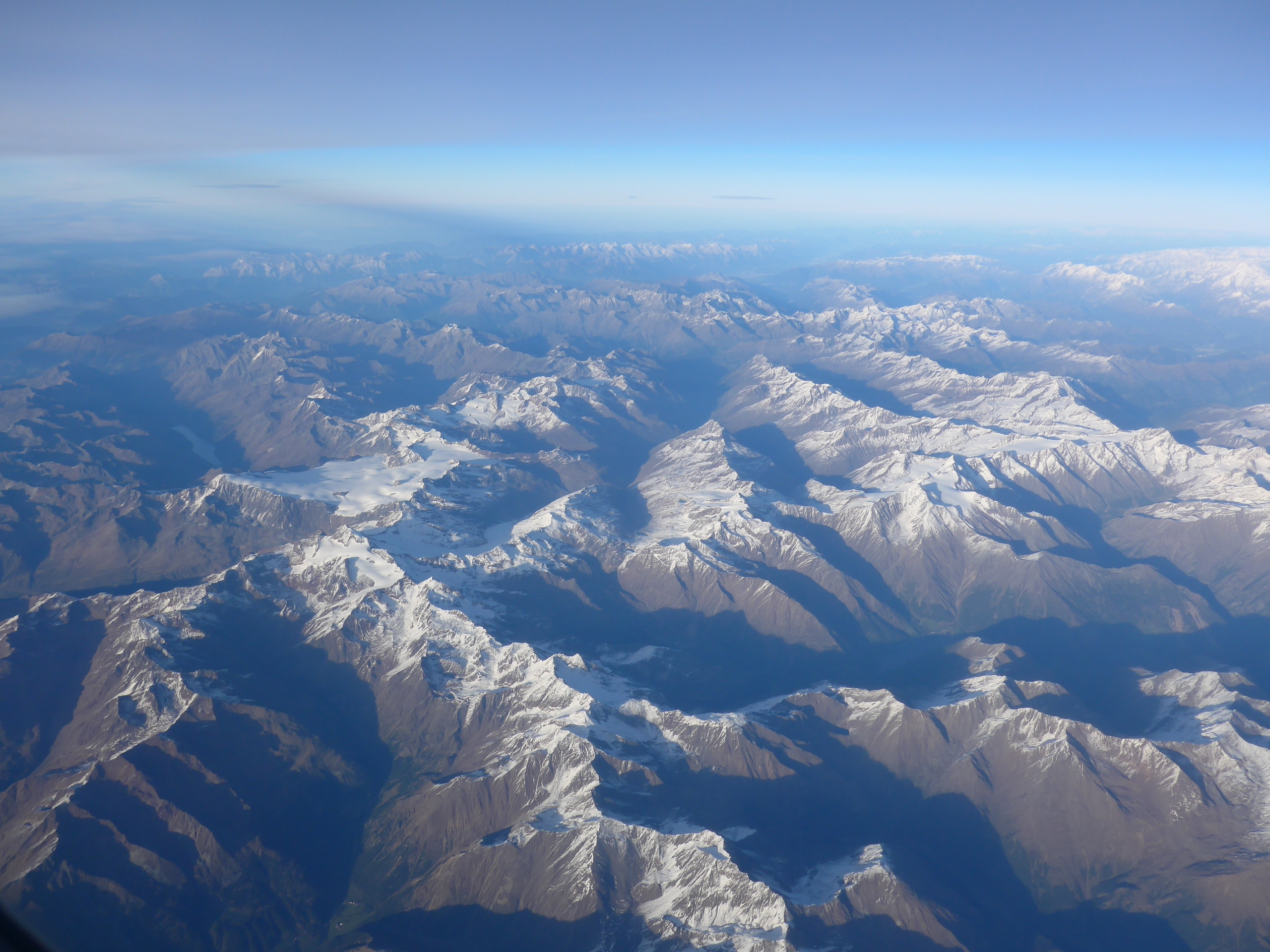
How Did 37 Elephants Survive Hannibal’s Alpine Crossing?
For over 2,200 years, historians, archaeologists, and geologists have debated the route taken by Hannibal as he led an army of 46,000 men, thousands of horses, and the legendary 37 elephants across the Alps to launch an attack on Rome. Recent research has approached this ancient enigma from a new perspective by calculating the energy requirements for both soldiers and animals to traverse various possible paths.
Hannibal’s Bold Expedition
In 218 BC, at the outset of the Second Punic War, Carthaginian general Hannibal made a daring decision to surprise Rome by approaching from northern Italy—a direction deemed nearly impossible by the Romans. He undertook a journey of approximately 1,000 kilometers from the Iberian Peninsula, crossed southern France, and navigated the treacherous Alps. Despite losing nearly half of his troops during the journey, he successfully descended into the Italian plains and defeated the Romans in key battles such as Trebia, Lake Trasimeno, and Cannae, marking this alpine crossing as one of the greatest military feats in history.
A New Perspective on the Route Debate
Research published in the Proceedings of the National Academy of Sciences has compared four Alpine passes that have long been the subject of historical debate. According to their calculations, the route through the Col de la Traversette—a mountain pass located at about 2,950 meters altitude on the France-Italy border—was found to be the most energy-efficient. Alternative routes required between 11% and 19% more effort for the entire army.
Historically, many scholars favored the Col du Clapier, also on the France-Italy border but located further north. This route seemed more consistent with the accounts of Greek historian Polybius and was considered better-suited for the movement of a large army. However, the new findings support the Traversette as a shorter and collectively less taxing journey for both men and animals.
The Energy Audit of an Ancient Expedition
To arrive at their conclusion, researchers conducted a comprehensive energy audit of the entire expedition, analyzing the requirements for soldiers, horses, and elephants. Crossing through the Traversette would have required a total energy expenditure of 5.42 terajoules, whereas the Clapier would have increased the effort by 16%.
One of the unexpected focal points of this study is the elephants. Each weighed around three tons and had substantial dietary needs, typically consuming about 200 kilograms of vegetation daily and spending up to 14 hours eating. During the Alps crossing, fulfilling these needs was nearly impossible.
Survival and Resource Management
The researchers estimated that the effort of climbing and descending the mountains forced each elephant to expend energy equivalent to an extra five to six hours of feeding daily. Consequently, these animals would have had to rely on their fat reserves for sustenance. Remarkably, they only lost around 4% of these reserves during their journey, while soldiers depleted almost 19%. The researchers utilized modeling methods inspired by current African elephants to assess energy costs of movement based on body mass and terrain slope.
Additionally, the study quantified logistical necessities: if the army had relied exclusively on carbohydrate-rich foods to support their march, they would have needed to transport over 230 tons of supplies for the Traversette route. Choosing any of the other passes would have inflated the transportation burden by several dozen additional tons.
Intuition Over Calculation
While Hannibal certainly lacked the precise calculations available today, he may have intuitively understood which route required less effort and had a greater chance of keeping his men and animals alive. Thus, the choice of crossing was arguably more about efficiency than epic endeavor.
Implications for Historical Understanding
More than two millennia later, the debate over the exact path taken by Hannibal continues. However, this study introduces a novel argument: history can also be understood through the lenses of physics, biomechanics, and metabolism. Authors of the paper, Emilio Berti and Fritz Vollrath, represent the German Centre for Integrative Biodiversity Research and the University of Oxford, respectively.
Earlier research into the Traversette hypothesis gained traction in recent decades, with evidence presented in 2016 by microbiologist Chris Allen—indicating a large deposit of bacteria-altered dung near the Traversette pass, suggesting it could be compatible with the passage of thousands of animals, possibly Hannibal’s army. This earlier work, along with geological studies led by geologist William Mahaney, further reinforced the Traversette route based on sediment analysis and Polybius’ accounts of a major rockslide blocking paths.
This multifaceted approach to understanding historical events not only sheds light on Hannibal’s strategic choices but also highlights the intricate balance between human ingenuity and survival in the face of daunting challenges.