
Alibaba’s Qwen AI Model: A Crown Jewel with Financial Struggles
In February of last year, Jack Ma made a triumphant return to the spotlight, appearing alongside President Xi Jinping in a move that symbolized Alibaba’s resurgence. Since then, Alibaba has been steadily advancing its open AI model, Qwen, which has quickly become a focal point of its technological strategy. However, despite its impressive launch and growing popularity, Alibaba’s journey with Qwen has encountered significant financial hurdles.
Devastating Downloads: Qwen’s Explosive Popularity
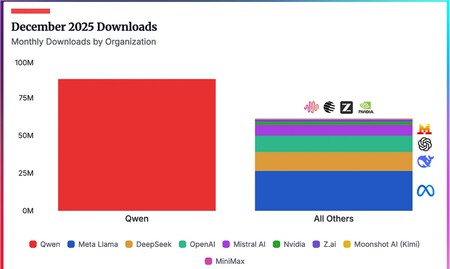
Alibaba launched its Qwen family of AI models in 2023, releasing them with open weights that allow users to implement them in diverse scenarios. This strategic decision led to remarkable adoption rates, with Qwen becoming the most downloaded open AI model globally. By January 2026, it boasted close to a million daily downloads, establishing itself as a formidable player in the AI landscape.
By the end of 2025, Qwen was already the most downloaded open weight model in the world. Source: AI Base.
Popularity vs. Profitability: The Revenue Discrepancy
Despite its soaring download numbers, Alibaba’s financial returns from Qwen tell a different story. In the first quarter of 2026, the company reported $1.3 billion in AI-related revenue, which accounts for just 4% of its total revenue. This figure starkly contrasts with Alibaba’s ambitious plans to invest $55 billion in AI infrastructure by the end of 2027, raising questions about the sustainability of its financial strategy.
Rising Investor Concerns
The apprehension among investors is palpable; Alibaba’s shares have plummeted by 37% in the Hong Kong stock market in 2026 alone. The lack of immediate financial returns has disillusioned investors, mirroring concerns seen in U.S. markets where profitability in AI has become a pressing issue.
Internal Divisions and Team Discontent
The pressure to monetize Qwen seems to be creating rifts within Alibaba’s team. In March, the chief engineer, Lin Junyang, announced his resignation, followed by several key engineers amidst internal disagreements about the best path forward for monetization. This turmoil suggests that the very foundation of Qwen’s development may be at risk, particularly as Alibaba begins pivoting towards proprietary models.
External Challenges: Geopolitical Pressures
Alibaba is also facing significant external pressures. The Pentagon has listed the firm on a blacklist, citing associations with the Chinese military, a claim Alibaba firmly denies. Additionally, accusations from Anthropic, alleging that Alibaba attempted to copy its technology using fraudulent accounts, further complicate the company’s situation.
The Broader Context: A Universal Challenge for AI Companies
Richard Lin, a Vice President at Datastrato, highlights a sobering reality: “At the moment, there are no AI companies with a sustainable business model.” This sentiment resonates deeply across the AI industry, indicating that the financial challenges are not unique to Alibaba or even specific to China. The stakes are high, and while the markets may emphasize immediate profitability, many companies are choosing to prioritize technological advancement over short-term financial gains.
In conclusion, Alibaba’s Qwen AI model may be a technological marvel, but the company grapples with the pressing challenge of monetization. As it navigates internal divisions, investor demands, and external pressures, the road ahead remains uncertain.