
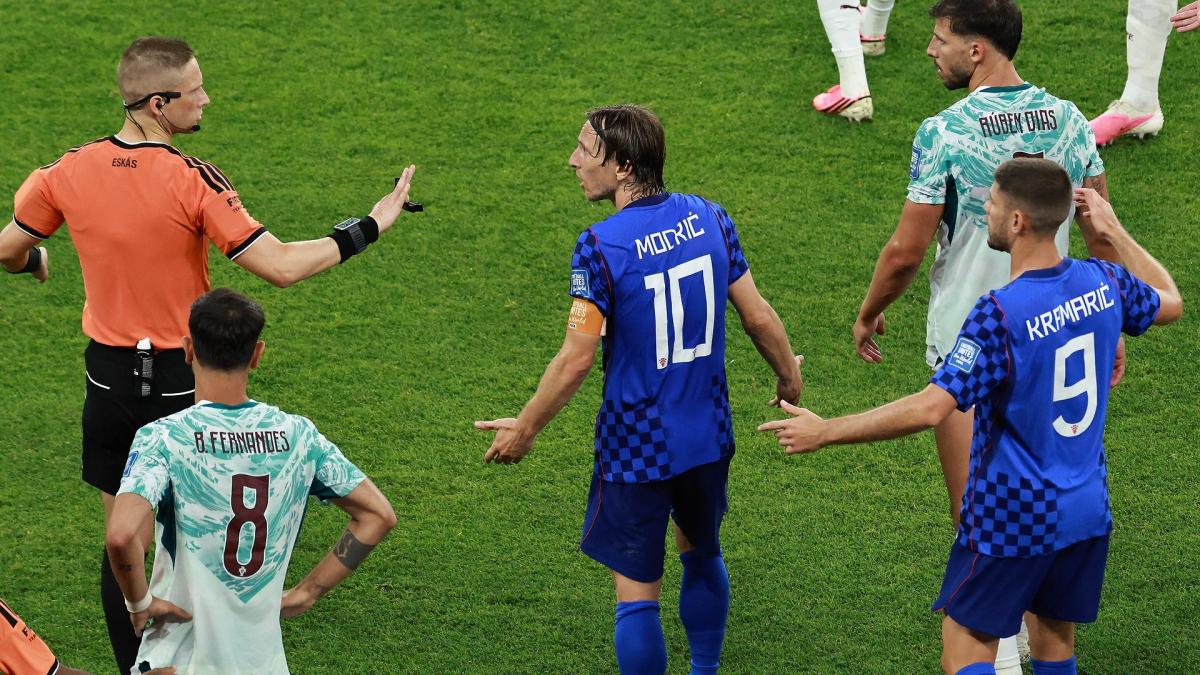
## Croatia’s Outcry: A Complaint Against FIFA
The controversies surrounding refereeing in the 2026 World Cup have reached unprecedented levels, with Croatia now stepping forward after their elimination against Portugal in the knockout stage. The Croatian national team, affectionately known as the Vatreni, feels wronged by what they deem incomprehensible refereeing decisions that affected their chances of progressing in the tournament. At the heart of their frustration lies the cancellation of Joško Gvardiol’s goal, a pivotal moment that has ignited a firestorm of anger towards FIFA.
## The Disputed Match Against Portugal
Croatia’s exit from the tournament was marked by a heated match against Portugal where decisions made by the officials have come under scrutiny. FIFA attributed the disallowed Croatian goal to a sensor in the ball that detected a hair’s breadth of contact with player Igor Matanović, ostensibly flagging an offside position. However, this explanation failed to appease Croatian officials, who have voiced their concerns about the integrity of the game’s officiating.
Amid an environment rife with other refereeing disputes, Croatia’s grievances have taken on added significance. Instead of merely post-match critiques, the Croatian Football Federation (HNS) has taken definitive steps to challenge FIFA’s judgments, indicating a desire for accountability and transparency.
## An Official Appeal to FIFA
In a letter directed to FIFA President Gianni Infantino, Croatian officials have outlined their dissatisfaction not only with specific decisions made by the match referee, Espen Eskas, but also with the process surrounding them. HNS spokesperson Tomislav Pacak articulated their stand, stating, “The Croatian Football Federation has sent a letter to FIFA President Gianni Infantino in which we express our deep disappointment and disagreement regarding the match against Portugal.” He went on to highlight concerns about the VAR protocol and how it was improperly applied during crucial moments, including a penalty awarded to Portugal.
Moreover, Pacak insisted that the decision to flag Pašalić offside for an alleged intervention by Matanović, which he claims had no grounding in reality, contravened both the rules and the spirit of football.
## Implications of the Complaint
The Croatian Federation’s actions go beyond mere protests; they seek a thorough explanation from FIFA regarding the technology used and the decisions taken. Pacak emphasized the importance of protecting the game’s integrity, arguing that the application of technology, while welcomed, must be handled judiciously. He warned that this misuse could set a dangerous precedent within world football.
“We believe this is an abuse of technology… we believe it is important to alert FIFA and request a detailed explanation of all decisions taken,” he asserted.
As Croatia joins the ranks of other federations like Belgium and England expressing dissatisfaction with FIFA’s officiating, it’s evident that the 2026 World Cup is becoming a battleground for discussions surrounding refereeing standards and the integration of technology in football.
## Conclusion
With Croatia’s formal complaint, the 2026 World Cup’s officiating controversies show no signs of abating. As teams navigate the competitive landscape of international football, the clamor for accountability from governing bodies like FIFA is set to intensify. The world will be watching closely as FIFA responds to these mounting pressures and addresses a growing sentiment for reform within the game.