
The Dark History of Hogar Casa de Belén
The Ramírez Family: Victims of Political Repression
The story begins in the early 1970s with Vicenta Orrego and Julio Ramírez, a Paraguayan couple fleeing the dictatorship of Alfredo Stroessner. They settled in Bernal Oeste, Buenos Aires, where they built a life, raising three children: Carlos, María, and Mariano. Their lives took a tragic turn when Julio was imprisoned in 1974 for having “subversive propaganda,” his incarceration signaling the start of a descent into hell for the family.
The Tragedy of March 14, 1977
On March 14, 1977, the family faced a horrific incident. Vicenta was shot dead in front of her children as they attempted to escape their violent reality. This moment would irreversibly alter their lives, leading to their confinement at Hogar Casa de Belén, a facility operational under the guise of providing a family-like environment for children of disappeared parents.
The Terrors Faced in Casa de Belén
At Hogar Casa de Belén, the siblings were not offered solace but faced systematic abuse and neglect. The conditions in the home were harrowing, described by survivors as akin to imprisonment. Children experienced abuse that extended beyond physical maltreatment; sexual exploitation became a terrifying norm. María and her brothers encountered a disturbing reality where they were forced to refer to their captors as “mom” and “dad.” Over the course of six years, they suffered a range of abuses that would leave lifelong scars.
The Search for Justice
The narrative shifts towards the courtroom as recent trials illuminate the horrific legacy of Casa de Belén. In 2023, several individuals tied to the center—including former police officers and judicial officials—were convicted of serious crimes linked to the center and its operations. The persistence of the Ramírez family, particularly Julio, who fought tirelessly from exile in Sweden, echoed their unyielding quest for justice.
Healing Through Art
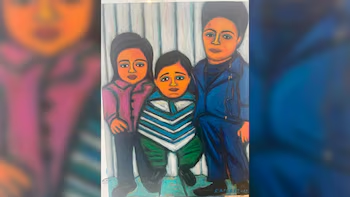
Despite the trauma, Maria Ramírez found solace in art. After years of struggle, she embraced painting and eventually used it as a medium to unveil her past. This cathartic journey not only allowed her to express herself but also connected her again with her roots. Her artworks, which gained recognition in exhibitions, represent a transformation from victimhood to resilience.
A Story of Resilience and Memory
The haunting legacy of Hogar Casa de Belén serves as a reminder of the impact of political repression in Argentina. The continued advocacy for justice by survivors like María reflects the country’s ongoing struggle with its past. Moreover, initiatives such as memorials erected at significant locations, including the site of her mother’s murder, allow for collective memory and healing.
Conclusion
The narrative of María Ramírez and her family illustrates a painful chapter of Argentina’s history, marked by loss, resilience, and the search for justice. As the years progress, it remains vital to acknowledge and learn from these experiences to prevent such atrocities from happening in the future.