
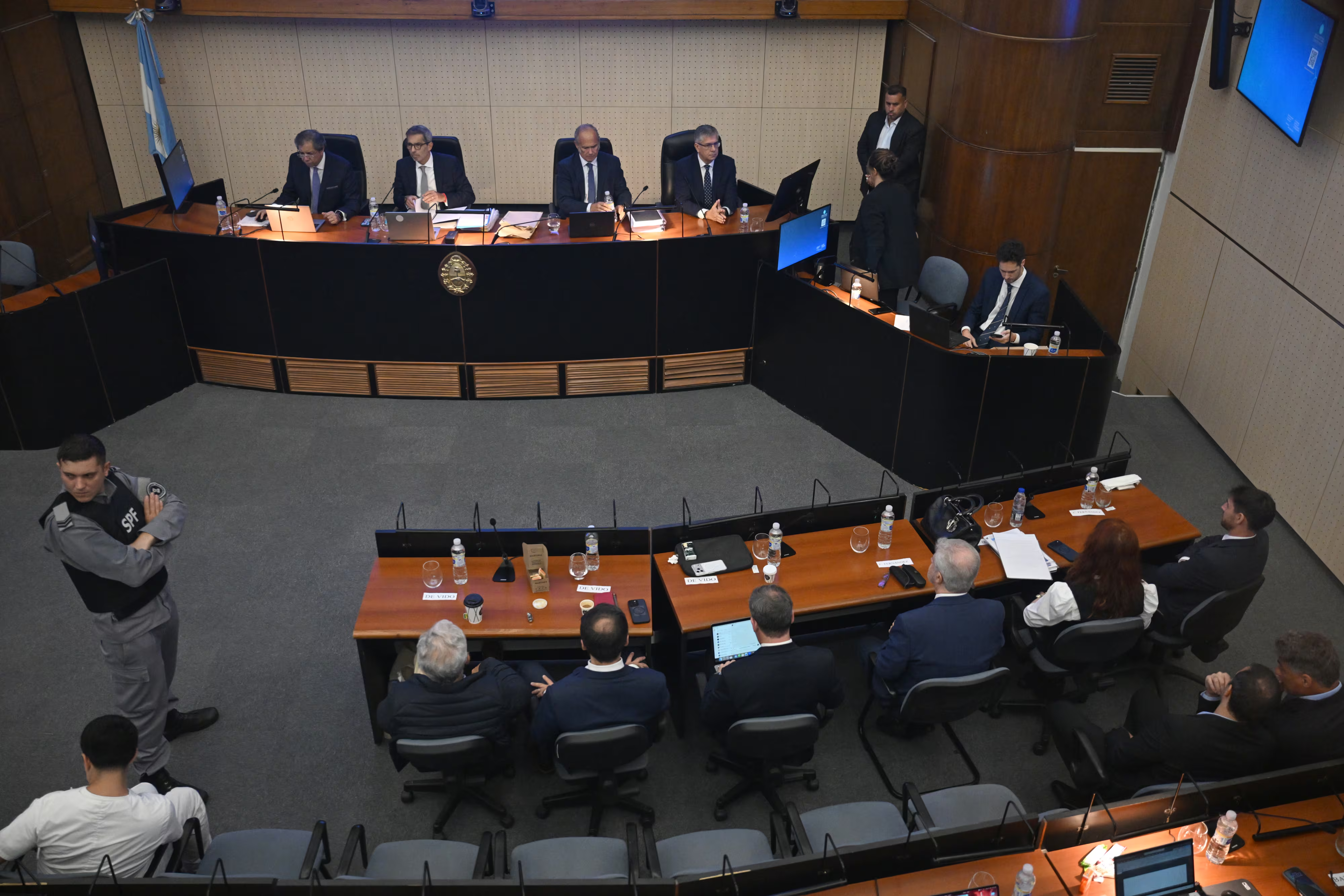
Progress in the “Notebooks of Corruption” Trial
The Federal Oral Court 7 has resumed the hearings in the high-profile case known as the “Notebooks of Corruption.” This ongoing investigation has captured public attention due to its implications for political and economic accountability in Argentina. On July 2, 2026, the former head of the Dirección General Impositiva (DGI), Horacio Castagnola, took the stand as a witness. His testimony is anticipated to bring valuable insights into the case, which has been marked by its complexity and the high-profile individuals involved.
Who is Horacio Castagnola?
Horacio Castagnola is a significant figure within the Argentine tax system and has held various key positions. His role as the head of the DGI positions him uniquely to provide a perspective on the operational aspects of tax collection and compliance during the period in question. As a witness, he is expected to clarify certain aspects of the case that pertain to financial operations and potential misconduct related to public funds.
Altered Witness List
On the same day of Castagnola’s testimony, it was announced by prosecutor Fabiana León that two other witnesses would not be called. Jaime Mecikovsky, the former deputy director general of Tax Operations at the AFIP, and Eliseo Devoto, the former head of Legal Affairs during Alberto Abad’s administration, were initially set to provide testimony. However, the prosecutor indicated that the relevant evidence had already been established through previous witness statements, making their appearances unnecessary.
Judicial Decisions
This move by the prosecution reflects a strategic shift in the trial proceedings. The judges, Enrique Méndez Signori, Germán Castelli, and Fernando Canero, accepted the prosecution’s recommendation not to hear from Mecikovsky and Devoto. This decision aims to streamline the trial process and focus on the most pertinent testimonies.
The Significance of the Trial
The “Notebooks of Corruption” case is vital for the Argentine public and the political landscape. It not only calls into question the accountability of public officials but also examines how corruption can alter the country’s governance and public trust. As more testimonies are heard, including that of Castagnola, the revelations could reshape the understanding of the overarching scandal and its implications for future governance in Argentina.
Looking Ahead
The ongoing proceedings are not just about the individuals directly implicated but also serve as a critical reflection on public accountability and integrity within government institutions. As the court navigates through these testimonies, it raises the hope for a more transparent and just political environment in Argentina, one where corruption is addressed head-on.
As the hearings continue, all eyes will remain on the Federal Oral Court 7, waiting to see how justice will unfold regarding this significant chapter in Argentina’s political history.