
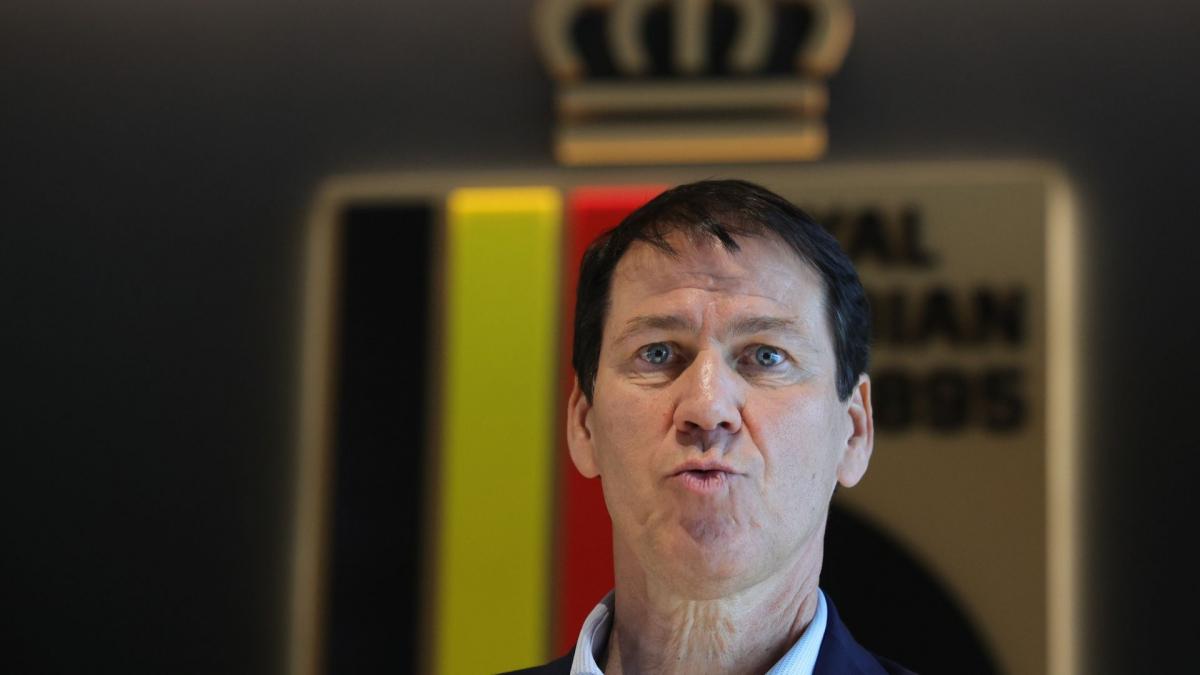
Rudi Garcia’s Controversial Commentary
Rudi Garcia, the coach of Belgium’s national football team, stirred controversy during a post-match analysis following Belgium’s narrow victory over Senegal (3-2). His critique of Senegalese coach Pape Thiaw’s tactics raised eyebrows among fans and media alike. As Belgium celebrated their qualification, the contentious nature of Garcia’s remarks illuminated the intricate dynamics of international football and national pride.
Context of Garcia’s Remarks
Garcia commented on Senegal’s strategy after they took a 2-0 lead, suggesting that they unintentionally compromised their tactical structure while trying to defend their advantage. He stated, “We know these teams, they lose their tactical structure towards the end of the match… Remind me when we lead 2-0 not to do that, because when you concede a goal like they did at 2-1, the match has changed its soul.”
These words suggested that Senegal’s decision to focus on defense ultimately precipitated their downfall, a view that was met with mixed reactions.
The Backlash and Clarification
After his comments drew criticism, a Senegalese journalist pressed Garcia for clarification during a press conference. In response, Garcia modified his stance, stating, “No, no, I didn’t say that…when you are leading, you tend to go back and try to protect your goal.” He reiterated that Belgium capitalized on the opportunity presented when Senegal experienced a shift in momentum.
Garcia expressed that had Belgium not scored the pivotal goal at 2-1, they might not have found a way back into the game. This moment was crucial, as he emphasized how the psychological dynamics of the match changed once the scoreline shifted.
Acknowledging Senegal’s Efforts
Despite the provocative nature of his initial comments, Garcia ended his clarification by complimenting Senegal’s competitive spirit. He stated, “Senegal deserved to pass as much as we did. But we’re quite happy that it’s us because we’ve come a long way.” This remark sought to acknowledge the strong performance of the Senegalese team, framing the match as a well-fought battle between two worthy opponents.
Final Thoughts
The exchange between Garcia and the journalist highlights the complex interplay of strategy, psychology, and national pride in international football. Coaches often operate under enormous pressure, and their comments can either galvanize or polarize supporters.
While Garcia’s initial critique of Senegal may have been perceived as disrespectful, his subsequent acknowledgment of their effort reveals a deeper appreciation for the game’s nuances. As Belgium moves forward in their campaign, the focus will undoubtedly shift to strategy, performance, and learning from past encounters—a testament to the relentless nature of football at the international level.