
Spain and Portugal: A Unique Geological Dance
Spain and Portugal are moving in a clockwise direction, unlike the rest of Europe, resulting in a long-term closure of the Mediterranean Sea. This gradual convergence between the Eurasian and African tectonic plates is subtle, advancing just a few millimeters each year. Consequently, the Mediterranean, which connects the Iberian Peninsula to North Africa, is gradually being sealed off—a phenomenon indicative of the looming geological event we term “Pangea Ultima,” where, in 250 million years, the continents may coalesce into a singular landmass.
The Mechanism Behind the Movement
Recent research from the University of the Basque Country, in collaboration with the universities of Palermo and Granada, has brought clarity to this movement. The study affirms that the Iberian Peninsula is undergoing a clockwise rotation driven by the slow yet consistent convergence of the Eurasian and African plates. The convergence is not entirely new information, but the study dives deeper into the mechanics at play along the diffuse boundary of these two plates.
The Gibraltar Arch’s Role
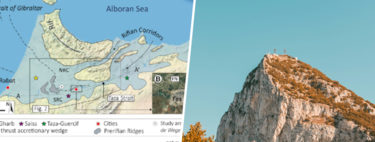
The Western Mediterranean’s tectonic boundaries are complex, significantly influenced by the “Gibraltar Arch.” This arch acts as a buffer, absorbing deformation from the collision of the two plates. In its absence to the southwest, direct collisions occur, resulting in the observed clockwise rotation of the Iberian Peninsula with profound geological implications.
Data Analysis and Findings
To arrive at these conclusions, researchers employed a dual methodology combining satellite deformation analysis through the Global Navigation Satellite System (GNSS) with historical earthquake data. This comprehensive approach allowed scientists to map surface displacements with millimeter accuracy, delineating regions in direct collision as opposed to those buffered by the Gibraltar Arc.
What About Our Neighbors?
It is essential to note that this geodynamic evolution primarily affects the Iberian Peninsula. While Spain is turning clockwise, neighboring countries like Italy are undergoing counterclockwise rotation, intensifying stress along the Alpine region and the Anatolian plate in Turkey. This disparity highlights the unique geological trajectory of the Iberian Peninsula, which will eventually lead to its unification with Morocco.
Unification and Future Projections
The predicted convergence rate of 4 to 6 millimeters per year suggests a future where the Iberian Peninsula and Morocco may eventually join, potentially closing the Mediterranean. However, this dramatic shift is still about 100 million years away, with the next 20 million years expected to proceed at the current pace, followed by an acceleration in movement.
Practical Implications of Research
The immediate utility of this research lies in the better identification of active faults and previously undetected tectonic structures. As noted by Asier Madarieta-Txurruka, one of the study’s contributors, understanding where these structures and boundaries are located can be invaluable for anticipating earthquakes, especially in regions like the Western Pyrenees and southern Spain. Recognizing these dynamics will aid in assessing geological risks, providing essential data for future urban planning and safety measures.
The Bigger Picture
While the closing of the Mediterranean and the eventual formation of a new supercontinent might sound alarming, researchers emphasize that such geological changes are gradual. This newfound knowledge equips us with valuable insights about our planet’s dynamic nature, reminding us to appreciate the hidden forces at play beneath our feet.