

Understanding Primates and Childbirth Challenges
Childbirth presents significant challenges in the primate order, often exceeding those experienced by humans. The process involves complex anatomical and physiological factors, particularly associated with pelvic morphology and the size and orientation of the progeny.
Research Insights
New Scientist highlights studies published in the American Journal of Physical Anthropology and Nature Ecology & Evolution, which reveal that childbirth difficulties are a common reality among primates, not just humans. The findings indicate that many primate species confront narrow birth canals relative to the sizes of their offspring’s heads, significantly increasing the risk of complications.
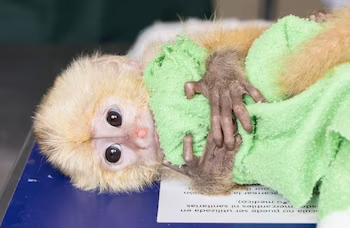
Evolutionary Pressure and Complications
The challenges associated with childbirth create an evolutionary pressure across primate species, contradicting the long-held belief that human births are the most complicated. The complications arise from the necessity for offspring to adopt specific orientations to navigate the birth canal, which can lead to prolonged labor or potential fatalities for both mother and infant.
Comparative Difficulties in Primates
Observations indicate this difficulty spans both great apes and various Old and New World monkeys, each exhibiting a spectrum of challenges and unique evolutionary adaptations. For instance, species like macaques and baboons experience particularly constricted birth canals, necessitating a precise fetal orientation for successful birthing.

Implications for Evolutionary Biology
The complexities of childbirth are significant for reproductive biology and evolution within the primate lineage. A constrained birth canal may favor strategies such as reducing relative brood size or adaptations allowing greater fetal flexibility during birth. Furthermore, the challenges of birthing are observed to influence maternal behavior and the inclination to seek aid from others, adding a notable social dimension to the birthing process.
The size of the offspring’s head is crucial for their cognitive development, while the mother’s ability to deliver without complications is equally critical, creating a balance that constitutes an evolutionary commitment. This interplay significantly affects rates of offspring survival, maternal longevity, and reproductive frequency.

Diversity in Birth Across Primate Species
The birthing experience varies significantly among primate species. Some groups, like certain Old World monkeys, possess birth canals that are inherently restrictive, while others, such as lemurs and marmosets, display anatomical adaptations that make the process more manageable. This diversity illustrates various evolutionary strategies that primates employ to ensure the survival of mothers and offspring during the birthing process.
Overall, the variability observed in primate childbirth signifies that evolution has produced different adaptations based on ecological and social pressures. This includes changes in pelvic structure and social behaviors, emphasizing that challenging births are a fundamental aspect of primate evolutionary history.