
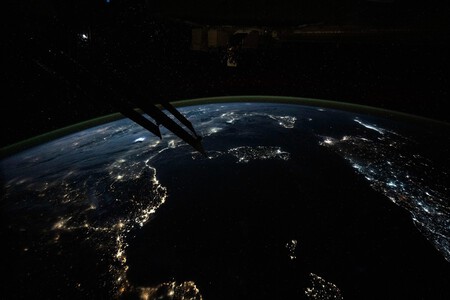
A Chromatic Change from Space
The astronauts who have traveled to space multiple times in the past decade are witnessing a global chromatic transformation. From their vantage point 400 kilometers above Earth, they observe that cities, once characterized by faint amber glows, now radiate an intense white light.
The Shift to LED Lighting
This transformation is not just metaphorical. It represents one of the most rapid infrastructural changes in modern history: the large-scale replacement of public lighting. Old sodium vapor streetlights have been retired in favor of LED technologies, a shift primarily driven by regulations favoring energy efficiency. From space, this changing landscape is vivid and striking.
The Technology Behind the Change
Old sodium vapor lamps, particularly low-pressure ones, emitted light in a very narrow band of the spectrum, which resulted in the familiar yellow-orange glow that enveloped our streets. The advent of LED technology, a milestone recognized with the 2014 Nobel Prize in Physics awarded to Isamu Akasaki, Hiroshi Amano, and Shuji Nakamura, has revolutionized the field. These high-efficiency blue LEDs, when combined with phosphor coatings, generate bright and affordable white light.
Southern Europe in 2025 from the International Space Station. Image: Don Pettit
City Transformations
Milan serves as a prime example of this shift, having completed its LED transition in 2015. Astronauts such as André Kuipers and Samantha Cristoforetti have documented this change through before-and-after photos. Other cities have followed suit. For instance:
- Los Angeles replaced 140,000 streetlights starting in 2009.
- Buenos Aires implemented smart LED streetlights between 2013 and 2016.
- New York concluded the replacement of 500,000 bulbs in 2023.
- Barcelona plans for comprehensive remote management of public lighting by 2028.
- India has emerged as a leader, installing over 13 million LED streetlights.
The Dark Side of Brightness
However, every revolution has its drawbacks. The affordability of LED lighting has led to not just replacement but also an increase in the number of light points and their intensity. The consequence? A planet that is significantly brighter, complicating efforts to mitigate light pollution.
Understanding Light Pollution
While official reports suggest otherwise, it’s important to acknowledge that traditional measurements of light pollution conducted via satellites often overlook blue light. Thus, the actual increase in light pollution, particularly affecting human perception, is likely much higher than recorded. Additionally, blue light has shown to disrupt our biological clocks, potentially affecting sleep patterns and disorienting wildlife such as migratory birds and moths.
The Future: Smarter Lighting Solutions
A return to sodium is not the answer. The advantages of LED technology are clear. The next phase is to focus on the application of this technology through smart streetlights. Predictions forecast that nearly one in four streetlights could be smart by the year 2030. These connected systems will be able to adjust their brightness based on time or traffic, detect faults in real-time, and gather environmental data.
Innovative Solutions for Biodiversity
This remote management allows cities to adopt a new principle: using only the necessary light, when and where it is needed. Innovative alternative solutions to protect biodiversity are also emerging, including experiments with red light in Nordic cities to minimize disruption to bats. Furthermore, the concept of utilizing bioluminescence presents a sustainable method of offering illumination while reducing electrical consumption and environmental impact.