
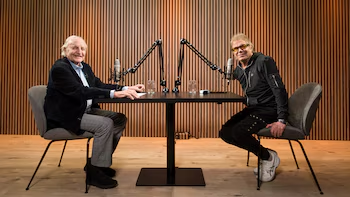
Beto Casella and Fernando Marín: A Deep Dive into Politics and Familial Bonds
In the latest edition of Proyecto 86, a captivating audiovisual series airing weekly on Infobae’s YouTube channel, Fernando Marín and Beto Casella reconnect over shared memories and significant insights. Their longstanding friendship, rooted in their experiences dating back to the 90s, surfaces not only through light-hearted banter but also through serious discussions about politics and personal histories.
A Resonant Conversation
Beto Casella, a prominent media figure, opens up in this emotional exchange, identifying himself as a “disheartened and dispirited Peronist.” His insights into Argentina’s political landscape are both keen and thoughtful, highlighting his commitment to social issues and his concerns regarding the present-day political leadership. The conversation shifts poignantly when Casella recalls the unwavering love of his mother, affectionately referred to as “la Tana,” and the heartbreaking progression of his father’s cognitive decline.
A Look Back at Family Roots
Beto’s deep connection to his heritage is palpable as he narrates how his parents migrated from war-torn Italy to Argentina, a journey facilitated by Juan Domingo Perón. This historical context reinforces his Peronist identity, intertwined with familial gratitude. “My parents were brought here when they had nothing,” he states, emphasizing the transformative influence that Perón had on their lives.
Marín probes deeper into Casella’s political stance, revealing Beto’s mixed feelings. While he cherishes the foundational values of Peronism, he expresses disappointment with later political figures who claimed the title yet strayed from its core tenants.
Reflecting on Loss and Memory
The discussion transitions to a more vulnerable tone as Casella reflects on his family’s dynamic. He recalls the profound relationship his father had with his mother, shedding light on how her death led to his father’s emotional unraveling. “When she passed away, he lost his mind,” Beto shares, articulating the pain of witnessing his father’s decline.
These reflections draw parallels between the two men, with Marín revealing his own experiences of grief and loss, fostering a deeper connection between them. Their shared stories serve as a reminder of the beloved figures who shaped their lives, underscoring a universal theme of love and loss.
Critique of Political Leadership
As the conversation delves into the current political landscape of Argentina, Casella critiques the rise of eccentric leaders. He notes, “What we’re seeing isn’t just an Argentine phenomenon; it’s global.” The emergence of populism, particularly among centrist-right figures, raises questions about the nature of leadership and accountability.
Both Marín and Casella lament the public’s tendency to elevate flawed leaders posthumously, pondering the implications of corruption within political systems. Casella asserts, “Corruption seems inherent to power,” expressing his concerns about a political culture where economic gain often overshadows responsible governance.
Conclusion: The Human Element
Ultimately, the profound reflection shared between Fernando Marín and Beto Casella exemplifies the importance of human connection amid political discourse. Their candidness, mixed with emotional resonance, offers viewers a glimpse into the personal stakes underpinning public life. As they navigate the complexities of politics and personal histories, it becomes clear that behind every media persona, there are familial bonds and heartfelt experiences that shape one’s perspective.
This conversation leaves viewers not only with insights into Argentina’s political challenges but also with the reminder of the enduring power of love, memory, and the bonds that unite us through both triumphs and tragedies.