
Clandestine Excavation Uncovers Imperial Roman Villa
Discovery in Castel di Guido
In a remarkable revelation, an imperial Roman villa has emerged in Castel di Guido, located approximately 21 kilometers west of Rome. This significant find follows clandestine excavations that compelled local authorities to intervene, revealing remnants connected to Lorium, an ancient settlement on the Via Aurelia associated with the Antonine dynasty.
Public Access and Ongoing Research
On June 20, the site officially opened to the public, offering free tours by reservation for those interested in exploring the ruins and ongoing restoration efforts. The discovery includes various domestic and functional structures, alongside an array of archaeological artifacts currently under investigation.
Castel di Guido, now the largest public farm in Italy, produces sunflowers, olive oil, and livestock. Historically, it served as the site of Lorium, notable for its proximity to key figures of the Antonine dynasty. Roman emperors such as Hadrian and Marcus Aurelius had personal connections to this locale, with Antoninus Pius even passing away at his familial estate nearby.
Image credit: Italy Ministry of Culture
The Fight Against Illegal Excavation
In February, authorities were alerted to unauthorized excavation activities in the region. The subsequent response from the Ministry of Culture and the Carabinieri successfully halted these operations, securing the archaeological site. Minister of Culture Alessandro Giuli emphasized the importance of protecting such historical areas, shedding light on an imperial-era villa deeply rooted in Roman history.
Though officials have managed to stop the illegal digging, initial assessments indicate that the site suffered significant damage prior to their arrival. Careless excavation methods included the use of backhoes and the exposure of older structures, leading to concerns about the preservation of the site.
Remarkable Features and Artifacts
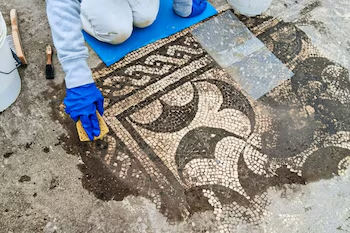
Under the leadership of archaeologist Alessia Contino, experts have enhanced their understanding of the site, identifying well-preserved environments. Key findings consist of 1.5-meter-high walls, intricate floral and geometric mosaics, and pieces of painted plaster. The villa is centered around an impluvium—a sunken pool designed for rainwater collection, emphasizing both practical and aesthetic functions within Roman architecture.
Four additional rooms showcasing exquisite mosaic flooring were discovered, alongside structures indicative of the area’s productive activities, as documented.
Among the most intriguing artifacts unearthed is a fragmented marble statue believed to depict Silvanus, the Roman deity of the countryside, further suggesting that the villa may have belonged to a high-ranking aristocrat closely connected to the imperial court.
Conclusion
The uncovering of this imperial Roman villa at Castel di Guido highlights the rich history that lies beneath the Italian landscape. As scholars continue to study the remnants and their significance, the site offers invaluable insights into Roman life and its lasting impact on European culture. The hope is that ongoing preservation efforts will protect this historical treasure for generations to come.