
The Blowfly Crisis: A Unique Challenge for U.S. Agriculture
As heat waves become more frequent due to climate change, agriculture is facing unprecedented challenges. One such challenge is the recent emergence of blowflies in the U.S. for the first time in 60 years. Known as “boring worms,” these pests pose a severe threat to livestock, particularly cattle. Following the importation of 1.2 million cattle from Mexico, cases of blowfly infestations have been detected, risking losses of up to $3 billion in Texas alone.
The Response: Fertility Control Strategies
In an urgent response, Washington has banned the importation of Mexican beef to mitigate risks and control prices. To tackle the blowfly issue, the government is deploying one hundred million infertile male flies weekly in a bid to reduce the overall fly population. Experts estimate that 600 million of these neutered males are necessary for effective population management. However, the federal government currently lacks the resources to meet this demand, largely due to staff cuts implemented during Donald Trump’s administration.
Rare Earths: The Hidden Resource Dilemma
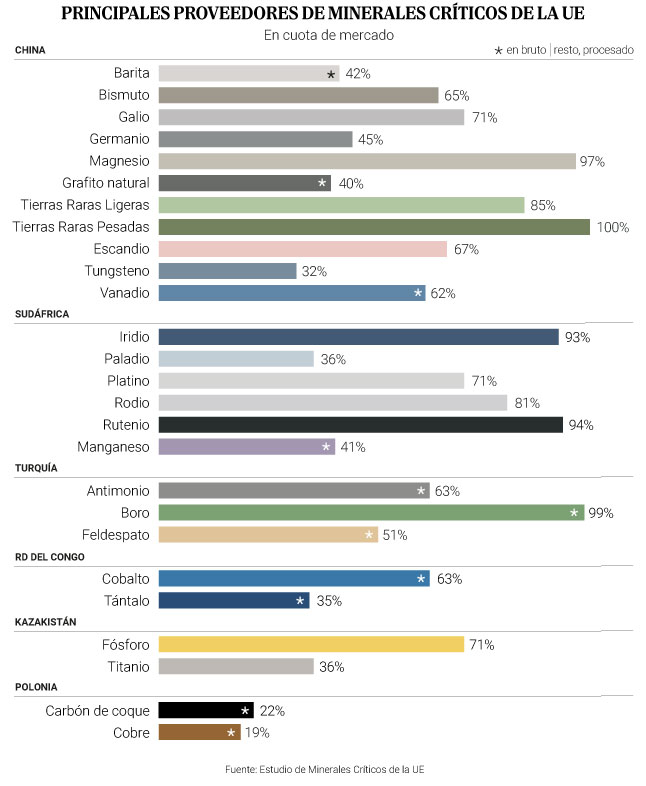
While the blowfly crisis puts agricultural stability at risk, another silent yet significant issue looms on the horizon—rare earth elements. Europe’s push for green technology and decarbonization exposes its reliance on these critical minerals, most of which are predominantly sourced from China. With recent geopolitical tensions and supply chain disruptions, the question arises: Are rare earths truly rare, or merely monopolized by China?
The Need for Local Extraction
The European Union is realizing the urgent need to open local mines to secure these essential minerals for clean technologies. As Europe engages in trade talks with China, the conversation isn’t solely about rare materials but also about manufactured goods, as China’s export market expands amidst slowing domestic consumption.
NAFTA to USMCA: A Shift in Trade Relations
Another layer to the economic landscape is the transition from NAFTA to the USMCA, reflecting shifting dynamics in U.S., Canada, and Mexico relations. Established in 1994, NAFTA was an early indicator of post-Cold War globalization. Yet, President Trump’s renegotiation initiated in 2017 highlighted a move towards ‘deglobalization.’ The current USMCA, which officially evaluates this week, aims to ensure ongoing negotiations rather than a one-time agreement, keeping partners on their toes.
The Gold Market: A Hotbed for Illegal Activity
As economic systems shift, the global market for gold also faces turbulence. Despite a 30% drop from its all-time high earlier this year, gold is still valued significantly higher than a year ago. This fluctuation has resulted in increased illegal mining operations, particularly in developing countries. Armed groups protect these operations, leading to a dangerous intersection of criminal enterprises and precious metal extraction. Countries like Ecuador, Colombia, and Venezuela face rampant illegal activities in their gold sectors.
High-Stakes Departures: Impacts on Tech Giants
In the tech realm, the abrupt departures of AI leaders Noam Shazeer and John Jumper from Alphabet have sent shockwaves through the stock market. Their exits led to a staggering loss of €237.7 billion in market value, highlighting the unpredictability of talent dynamics in the technology sector. The tech landscape is increasingly competitive, with companies fiercely vying for top talent, which reflects broader instabilities in evaluating future technological worth.
Libya: Oil as a Peacekeeping Tool
In geopolitical affairs, Trump’s approach to Libya offers a perplexing yet strategic maneuver where oil is leveraged for peace. By facilitating dialogue among rival factions while ensuring U.S. oil company interests like ConocoPhillips and Chevron are safeguarded, Trump seeks to stabilize a nation torn by conflict. This strategy underscores the complex interrelations between natural resources and international diplomacy.
In summary, these interconnected challenges—from agricultural crises linked to climate change to geopolitical maneuvers over natural resources—highlight the multifaceted nature of today’s economic and environmental landscape. The trends and responses in agriculture, trade, mineral extraction, and technological investment will play a crucial role in shaping future policy and economic development.