
Overview of the Longest Solar Eclipse
On July 16, 2186, a remarkable astronomical event will unfold: a total solar eclipse unlike any seen before. During this event, the Moon will perfectly align between the Earth and the Sun, casting its shadow across the Earth. This eclipse, lasting an astounding 7 minutes and 29 seconds, will surpass the previous longest duration recorded during the eclipse of June 15, 743 BC, which lasted 7 minutes and 27 seconds.
A Unique Event in History
This forthcoming eclipse will hold a unique position in astronomical history. With no eclipses reaching similar durations before 4000 BC and none anticipated after 8000 AD, this event stands out as a significant milestone in a 12,000-year span.
Where to Experience the Eclipse
Although the longest duration of totality will occur over the Atlantic Ocean, northern South America will indeed have excellent viewing opportunities. Locations in Colombia, Venezuela, and Guyana will experience extended periods of totality, with cities from Cali to Puerto Ayacucho in Colombia and regions along Venezuela’s Orinoco River being prime spots. The northern region of Guyana, including its capital, Georgetown, will also be favorable for stunning views of this celestial phenomenon.
Furthermore, much of South America, including Brazil, will be able to witness a significant partial eclipse. Observers as far as Mexico, Paraguay, and parts of Africa will also have a chance to see a portion of the event while the Canary Islands in Spain may catch a glimpse during sunset.
The Science Behind the Duration
The exceptional length of this solar eclipse can be attributed to specific cosmic alignments and positions. Here’s how:
- Earth’s Position: The Earth will be at aphelion, its furthest point from the Sun, causing the solar disk to appear smaller.
- Moon’s Proximity: Conversely, the Moon will be at perigee, its closest point to Earth, making its apparent disk larger.
- Equatorial Trajectory: The eclipse path will cross near the Earth’s equator, maximizing the duration of the shadow cast on the surface.
Precise Predictions
The accuracy of eclipse predictions is a remarkable achievement in computational astronomy. By utilizing advanced algorithms that account for gravitational equations and Newton’s laws of motion, scientists can accurately project celestial positions centuries into the future, with margins of error often less than a minute.
A Connection to Past and Future Eclipses
The eclipse of 2186 belongs to the same “lineage” as the Great North American Eclipse of April 8, 2024, classified under the Saros cycle 139. This cycle is approximately 18 years, 11 days, and 8 hours long, producing very similar eclipses spaced roughly 120 degrees apart.
A Glimpse into the Future
As we contemplate this millennium event, eclipse enthusiasts are likely already envisioning the experience. Ideas of fleets of cruise ships and hypersonic planes chasing the Moon’s shadow suggest the lengths people will go to witness this extraordinary event.
Upcoming Eclipses
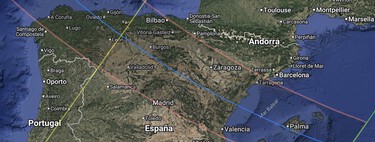
While the 2186 eclipse may be far off, there are opportunities for total solar eclipses before then. For instance, on August 12, 2026, Spain will witness the first of three Iberian eclipses, which promise exciting astronomical experiences to tide us over until the grand event of 2186.
A version of this article was published in July 2025