
Political Dynamics in Argentina: Santilli, Caputo, and the Peronist Governors
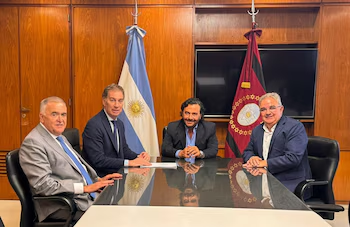
In a critical juncture for the Argentine government, Interior Minister Diego Santilli and Treasury Palace head Luis “Toto” Caputo convened with key Peronist governors. This meeting aimed to address the pressing political challenges facing the administration during an intense opposition offensive.
Meeting at the Ministry of Economy
On Tuesday, Santilli and Caputo met with governors Raul Jalil (Catamarca), Gustavo Saenz (Salta), and Osvaldo Jaldo (Tucumán) at the Ministry of Economy. Each of these leaders holds significant influence within Congress, particularly concerning crucial votes in both the Senate and the Chamber of Deputies.
The backdrop of this meeting was a particularly volatile political environment, amplified by the arrival of Javier Milei and the looming threat of a motion of censure against Chief of Staff Manuel Adorni, a drastic step not undertaken since the 1994 constitutional reforms.
The Role of Santilli and Caputo
In the current political landscape, Santilli and Caputo are pivotal figures. Santilli is responsible for maintaining relationships with provincial leaders and engaging in parliamentary negotiations. Meanwhile, Caputo manages resources crucial to addressing the provinces’ financial and infrastructural needs, particularly vital under the restrictions imposed by Milei’s administration.
Economic and Political Requests
The governors arrived with specific agendas, emphasizing requests for public works funding, national financial transfers, and infrastructure projects. However, these economic discussions are intertwined with political negotiations. Jalil, Jaldo, and Saenz have established cooperative yet autonomous relations with the national government, facilitating parliamentary agreements essential for advancing government initiatives.
Strengthening the Government’s Position
In response to the mounting pressure from opposition factions, including Kirchnerism, which are aggressively pursuing a motion of censure against Adorni, there is an urgent need for the ruling party to strengthen its influence in both chambers of Congress. Recognizing the importance of these political alliances, Santilli has been diligently engaging with governors and parliamentary leaders to ensure a supportive framework for the government’s agenda.
The Importance of Electoral Reform
Another critical item on the agenda is electoral reform aimed at abolishing Open, Simultaneous, and Mandatory Primaries (STEP). This reform is a top priority for the government, requiring broad parliamentary backing—a support base that the ruling party currently lacks.
Varied Profiles of the Governors
The three participating governors each represent different facets of Peronism. Jalil of Catamarca has maintained a dialogue-driven approach with the national government, indicative of a willingness to collaborate. Jaldo of Tucumán has fostered autonomy while still engaging pragmatically with the administration. Saenz of Salta brings a strong provincial identity and coalition-building skills to the table, making him a frequent and critical interlocutor for the national government.
Looking Ahead
As these discussions unfold, both the ruling party and the opposition are closely monitoring their implications. The government recognizes that its legislative stability hinges significantly on effectively managing relationships with provincial leaders and navigating a fragmented Congress.
With the explicit aim of reinforcing political alliances essential for governance, Santilli and Caputo’s meeting with these governors signifies a strategic maneuver to uphold Milei’s legislative agenda amid rising tensions and opposition pressures. The outcome of these negotiations will likely shape the political landscape in Argentina in the foreseeable future.