
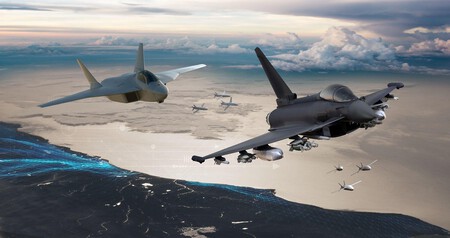
The Evolution of European Fighter Development
In 1986, a coalition comprising Spain, Germany, Italy, and the United Kingdom took a pivotal step by initiating the development of the Eurofighter Typhoon. This collaboration stretched over almost two decades, highlighting a key lesson: in Europe, fighter aircraft are not just a product of technical engineering but are deeply interwoven with industrial and political dynamics that can persist beyond the lifespan of the technology itself.
The Collapse of the FCAS: Spain’s Turning Point
The recent discontinuation of the Future Combat Air System (FCAS) highlights a significant failure in a military initiative valued at €100 billion. This collapse was a wake-up call for Spain, indicating it could no longer rely on France and Germany to navigate their industrial disputes effectively. The FCAS was touted as a next-generation European fighter; however, internal conflicts between Airbus and Dassault Aviation hampered production and distribution processes, leaving Spain without essential partnerships.
Spain’s Strategic Exit
In the wake of the FCAS’s demise, Spain quietly strategized, aligning with Indra and initiating discussions with Saab. The aim was clear: should the FCAS project falter entirely, Spain needed to form an alternative technological axis with Germany and Sweden. This partnership would focus on satellite technologies, combat cloud systems, sensor networks, and drone integration, ensuring Spain’s presence in the evolving sixth-generation aircraft landscape.
Italy’s Emergence and Its Implications for Spain
Italy’s recent overtures to Germany regarding the Global Combat Air Program (GCAP) introduced a new dynamic. Italy’s Leonardo has welcomed Germany’s industrial expertise and financial backing, which poses a strategic risk for Spain. The possibility of Germany redirecting its focus toward Italy, England, and Japan could jeopardize Spain’s contingency plans, pushing it into a corner.
The Quest for Leadership: Germany’s Position
Germany, historically seeking a leadership role, made its intentions clear by demanding a share of influence proportional to its investments. This stance fits more comfortably with Italy’s flexible approach compared to France’s rigid hierarchy, leaving Spain at a disadvantage.
The Dilemma Facing Spain
Now, Spain confronts a critical choice: if Germany aligns with GCAP, it will be caught between a collapsing FCAS and the loss of its obedient partner. Spain can either maintain pressure on France or consider alliances with Italy and Japan. However, entering these established programs late could severely limit Spain’s bargaining power, resulting in exclusion from the crucial discussions shaping the future of European air combat technology.
Europe’s Fragmented Approach
This situation underscores a recurring issue within European defense: too many disparate projects and competing interests create inefficiencies. While countries like the United States and China leverage centralized programs, Europe’s fragmented initiatives mean resources are scattered across rival factions.
Spain believed it had crafted a safety net post-FCAS. The challenge lies in ensuring that this framework, which depended on Germany, does not disintegrate due to Germany’s new alliances.