
The Geopolitics of the Ball: Football and Global Dynamics
The Political Significance of the World Cup
The World Cup transcends mere sport; it is a profound political event that mirrors the pressing tensions of the 21st century, including demographic transitions and the complexities of migration. At the heart of elite football is a phenomenon known as the “talent drain.” While Western Europe grapples with an aging population and declining birth rates, Africa experiences a population surge, effectively becoming a critical supplier of youth talent that European football desperately needs.
The International Division of Sports Labor
The talent dynamics in football create an international division of sports labor that disproportionately benefits the affluent clubs of Western Europe. This system has established a two-tier structure where:
Tier 1 consists of exceptional players aged 18-26, groomed in European academies and retained by elite clubs. Examples include talents like Lamine Yamal, Eduardo Camavinga, and Bukayo Saka.
Tier 2 includes established African players who, despite proving themselves in European leagues, find themselves without a future at clubs by the age of 27-29. These athletes are often “repatriated” to national teams, emphasizing the selective retention that enriches European football while disadvantaging African federations.
Identity versus Economic Structures
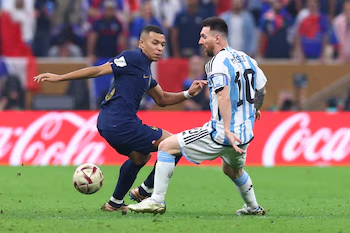
Delving deeper into the socio-cultural implications of football players’ identities reveals a complex tapestry. Players like Kylian Mbappé embody a blend of national pride and multicultural background. His genuine allegiance lies with France, despite his Cameroonian and Algerian heritage. This raises an interesting point: while the players seamlessly navigate their dual identities, European societies often reduce their contributions to mere symbols of integration.
The inconsistency becomes glaringly visible in the aftermath of victory or defeat. National heroes during successes, these players face scrutiny and prejudice once their performance falls short, bringing to light a troubling double standard regarding their immigrant backgrounds.
The Paradox of Argentine Exceptionalism
In this intricate landscape, Argentine exceptionalism emerges as a fascinating counter-narrative. While Europe’s robust infrastructure retains diaspora children, Argentina attracts talents like Alejandro Garnacho and Nico Paz. The cultural resonance of Argentina compels these young players, who could easily align with European teams, to embrace their Argentine roots passionately.
What is it about Argentina’s cultural DNA that fosters such loyalty, even in the absence of institutional support? Unlike the extraction-based value system of Europe, Argentina compels players through emotional resonance and a sense of belonging.
The Cost of Loyalty
Choosing to represent Argentina often comes with significant sacrifices. Players like Garnacho and soulé opt for a less certain path in their home nation rather than assured success within European powers. Their decision reflects a deeper cultural and emotional loyalty—an act of faith in a collective mythology that values sentiments over mere economic pragmatism.
As they cheer for the national team from afar, these players represent a resilient spirit woven deeply into Argentina’s rich football narrative—one that continually defies the financial allure of elite European football.