
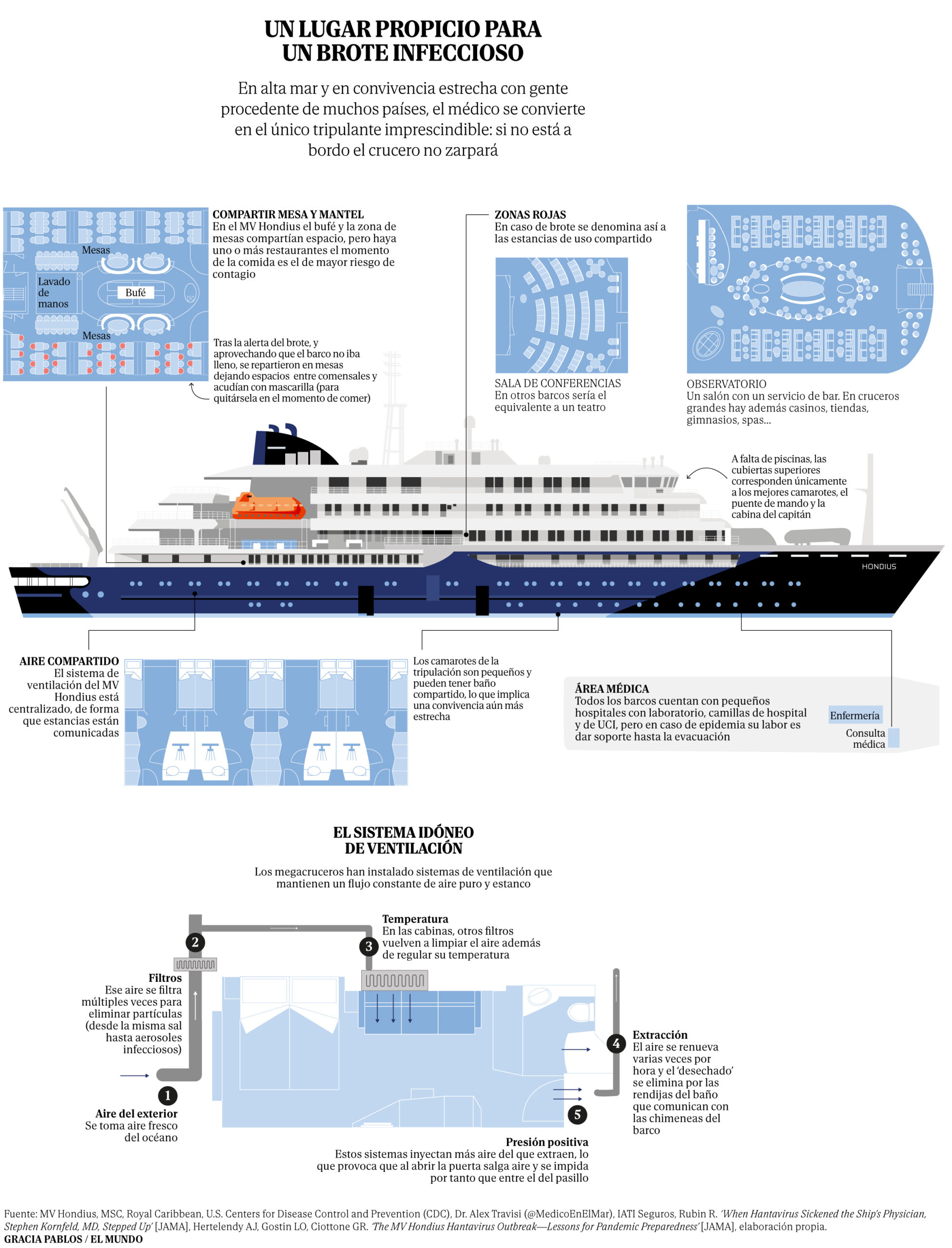
Risks Aboard the MV Hondius: Navigating Health Challenges
The MV Hondius, a modern exploration cruise ship, may offer breathtaking vistas and adventures, but it also presents unique health risks that passengers and crew should be aware of. Understanding these risks can help ensure a safer journey.
Hantavirus Outbreaks and Their Management
Recently, an outbreak of hantavirus Andes was detected aboard the MV Hondius. Experts like Ignacio López Goñi, a microbiology professor, emphasize that such infections spread in close quarters and were contained due to the ship’s closed environment. This incident reveals how swiftly infections can propagate in confined spaces.
Cruises are often viewed as vacation paradises. However, experts describe these ships as “floating laboratories” or “mobile sprouting platforms” of globalization. Such environments can easily facilitate outbreaks, evidenced by experiences during the COVID-19 pandemic.
Health Protocols: Prevention Before Boarding
The safety of passengers begins even before they step onboard. Medical protocols, as outlined by onboard physicians like Alex Travisi, include screening individuals with high-risk health conditions before allowing them to board. Those at higher risk include:
- Pregnant women in advanced stages
- Infants under six months
- Individuals with chronic diseases or immunosuppressed conditions
The onboard medical team is equipped to handle various emergencies, ranging from primary care to more specialized needs. Importantly, absence of a qualified physician is not an option; a ship cannot sail without its doctor.
Common Medical Incidents
Onboard medical issues are predominantly minor but can still disrupt the cruise experience. According to findings from IATI, the most frequent health complaints include:
- Gastrointestinal issues: Often caused by infections such as norovirus, which can spread easily in settings with shared dining experiences.
- Headaches and dizziness: Frequently linked to sun exposure or dehydration.
- Insect bites: Particularly when docked in tropical regions.
As Dr. Travisi highlights, a significant concern is the rapid spread of infections in communal spaces, such as dining areas and swimming pools. This risk can escalate quickly, necessitating strict health protocols for prevention.
Notable Outbreaks and Lessons Learned
The Diamond Princess incident during the pandemic provided crucial insights into managing outbreaks at sea. Over 700 cases emerged from a single cruise, emphasizing the necessity for robust public health measures. Although current international protocols trigger alerts with only 3% of passengers affected, internal thresholds are activated with just 0.5%. Timeliness in activation has proven vital in mitigating spread.
Quarantine Dilemmas
In the event of an outbreak, strategies such as onboard quarantine are considered. While this harkens back to historical practices, opinions are divided on its ethics and effectiveness today. Experts like Goñi and Trilla suggest that the concept may carry more drawbacks than advantages, particularly as sick passengers require clear evacuation protocols and appropriate land-based medical care.
Tips for Safe Travel
Before embarking on a cruise, ensure that you:
- Stay Informed: Regularly update your vaccination records, particularly for flu and COVID-19.
- Travel Insurance: Always secure travel insurance that specifically covers medical expenses, as most companies may not handle costs onboard directly.
- Health Awareness: Be mindful of health protocols and personal hygiene practices to reduce the risk of infections.
Conclusion
Sailing aboard the MV Hondius can be an unforgettable experience, but it also requires an understanding of potential health risks. By adhering to preventive measures and being aware of your health, you can truly enjoy the adventure at sea while effectively managing any risks that may arise.