
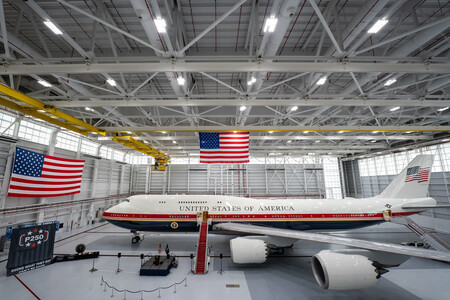
Understanding the New Presidential Plane: The VC-25B Bridge
A presidential plane is more than just an aircraft; it serves as an office and a powerful symbol of authority. Recently, at Joint Base Andrews, the United States introduced a new member to its executive fleet—an existing Boeing 747 that has been repurposed for presidential transport. This is not merely an acquisition from Boeing but a plane previously owned by Qatar, leading to a series of debates about its implications.
The Arrival and Its Implications
The unveiled 747, adorned with the American flag and new livery, appears ready for service. However, it has yet to complete its commissioning flights, essential for confirming its modifications before being officially inducted into presidential missions. This plane will act as a temporary solution while awaiting the delivery of the final two VC-25s scheduled for mid-2028, representing the operational needs of the U.S. Air Force as current models undergo extended maintenance.
A Historical Context of Air Force One
It’s pivotal to recognize that the term “Air Force One” is not specific to any one plane; it’s a designation that applies to any Air Force aircraft carrying the president. Thus, any military plane accommodating a president—such as the C-32 used commonly for the vice president—could assume the title of Air Force One during that journey.
Bridging the Gap: The VC-25B Designation
The “Bridge” in VC-25B signifies its role in filling a gap between the aging VC-25As, which have been in operation since 1990, and their successors. The new model, an adapted Boeing 747-8 around 13 years old, represents a shift towards a more modern platform—essential to ensure uninterrupted presidential transport as the current fleet ages.
Controversies Surrounding the Qatar Gift
The flight’s backstory adds layers of complexity. The plane was a gift from Qatar to the U.S. government, with modifications aimed at presidential use during the Trump administration. This transaction has sparked debates about ethical considerations, foreign influence, and how gifts from foreign governments should be managed, especially given the plane’s estimated value of hundreds of millions of dollars.
Safety and Security Concerns
In response to these concerns, the Air Force has asserted that the plane is equipped with the necessary technologies for its role. It has undergone assessments by a team of experts to identify any potential risks associated with the aircraft’s previous ownership. Nonetheless, detailed disclosures regarding its security capabilities remain vague, particularly concerning advanced systems designed to mitigate threats like electromagnetic interference.
The Balancing Act: Operational Necessity vs. Political Fallout
The introduction of the new 747 illustrates a critical balance between operational requirements and political sensitivities. While it provides a much-needed stopgap amid delays in the delivery of new aircraft, the decision to integrate a foreign gift raises questions about the long-term impacts on U.S. policies surrounding foreign gifts and security protocols.
The VC-25B may serve as a “bridge” aircraft, but its arrival is not devoid of controversy, embodying a mix of logistical pragmatism and political complexity as the military navigates the future of presidential transportation.