
The Shift in the Real Estate Market
When the real estate market tightens, prices skyrocket, leading to a significant imbalance between supply and demand. In cities like Madrid, buyers are losing viable alternatives for home purchases. Locations previously considered “plan B”, such as Alcobendas, Móstoles, or Getafe, are experiencing rising costs per square meter, transforming into increasingly unaffordable options.
The Impact on the Second-Hand Market
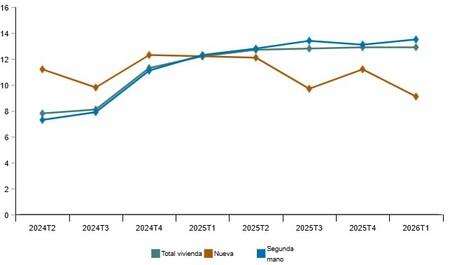
One of the last remaining refuges, the second-hand housing market, is also under pressure. Prices for used homes are escalating at a faster rate than for newly built properties, reminiscent of the market conditions seen before the 2008 bubble burst. The latest statistics from the INE reveal a concerning trend for potential buyers: the second-hand housing market is escalating much more rapidly than new constructions.
Rising Prices Analysis
As depicted in the House Price Index (IPV), the overall residential market grew by 12.9% during the first quarter of 2026. However, the price increase for second-hand homes stood at an alarming 13.5%, compared to a milder 9.1% for new homes. This heating of the second-hand market presents a clear indication of increasing demand and tension within the sector.
Regional Disparities in Price Increases
Examining these trends across different Spanish communities reveals stark regional differences. During the first quarter of the year, only the Canary Islands saw new home prices rise faster than those of second-hand homes. Contrastingly, in the Balearic Islands, new home prices increased by only 2.5%, while used homes soared by 15%.
A Closer Look at Second-Hand Price Trends
| Territory | Second-hand IPV Q1 2007 (%) | Second-hand IPV Q1 2026 (%) |
|---|---|---|
| National | 13.0 | 13.5 |
| Andalusia | 15.4 | 13.6 |
| Aragon | 9.9 | 16.4 |
| Madrid | 11.5 | 14.7 |
| Balearics | 13.9 | 15.0 |
This table highlights the stark contrasts in price growth, underscoring the rapid appreciation of used homes, particularly evident in regions like Aragon and the Balearic Islands.
Parallels with Previous Housing Booms
The situation in 2026 evokes memories of the 2007 housing boom, characterized by rampant price increases. Currently, while the general IPV rate is slightly lower compared to 2007, second-hand properties are witnessing quicker price escalations than during the height of the previous economic boom, signaling a potentially tumultuous market ahead.
Analyzing the Causes
Several factors contribute to this shift. The consistent shortage of new construction, significantly below the levels seen in the early 2000s, plays a critical role. For context, the housing stock in 2025 added only 94,800 properties, while demand continues to soar. The deficit in housing is now estimated at around 750,000 homes, exacerbating the pressure on the second-hand market.
Conclusion: The Luxury of Second-Hand Homes
As a result, the luxury of buying a second-hand home is becoming increasingly apparent. With 78.1% of housing transactions in 2025 involving second-hand properties, the demand remains high. Sellers in this market find themselves in a favorable position, while buyers are left grappling with rising costs and dwindling options.
Images | Javier Balseiro (Unsplash) and INE