
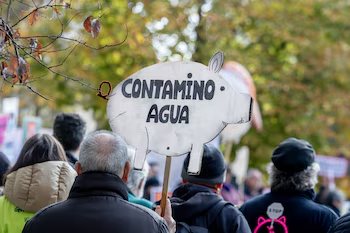
Nitrate Pollution in Spain: An Environmental Crisis
Nitrate pollution from industrial agriculture and livestock is leaving over 260,000 people in Spain without access to safe drinking water. The widespread use of fertilizers in intensive farming and waste from industrial livestock is causing significant environmental and health issues, with nitrates often exceeding the legal limit of 50 milligrams per liter (mg/l).
The Scale of the Problem
Recent data from the National Drinking Water Information System (SINAC) analyzed by Ecologistas en Acción reveal alarming statistics. Nitrate contamination is not merely a localized issue; it impacts 47 municipalities across various regions including Andalusia, Aragon, and Catalonia. This contamination has led to annual disruptions in drinking water supply from 2021 to 2024, disproportionately affecting smaller municipalities that struggle with limited resources for water treatment.
Health Risks Associated with Nitrate Contamination
More than half of Spain’s population in municipalities are consuming water with nitrate levels exceeding 6 mg/l. Studies indicate that such levels may increase the risk of colorectal cancer. Koldo Hernández, coordinator of the Water Area of Ecologistas en Acción, calls for the Spanish Ministry of Health to impose stricter regulations, recommending the nitrate limit in drinking water be lowered to 6 mg/l to better protect public health.
Gender Disparities in Water Collection
The consequences of nitrate pollution extend beyond health risks. In heavily affected regions, women bear the brunt of the crisis by taking on the primary responsibility for collecting water from authorized distribution points. This creates an additional burden, especially in small towns already facing resource challenges.
Future Risks with New Regulations
Concerns are mounting about the potential for worsening conditions if new agricultural directives, such as the inclusion of RENURE fertilizers—nitrates recovered from processed manure—are implemented without strict oversight. Kistiñe García, a co-author of the report, warns that increasing nitrogen application limits could further exacerbate nitrate contamination issues in the future.
The Need for Systemic Changes
To address this crisis, Ecologistas en Acción calls for an urgent transformation in Spain’s agricultural practices. The organization advocates for the application of the ‘polluter pays’ principle, recently incorporated into the Wastewater Directive, emphasizing that companies responsible for pollution should bear the costs generated by contaminated water supplies.
Conclusion: A Call to Action
It is clear that the current agricultural practices in Spain are unsustainable and pose a serious threat to public health and the environment. Adopting comprehensive reforms in agricultural policy, alongside stricter water quality regulations, is crucial. The health and well-being of over 260,000 people are at stake, and immediate action is necessary to ensure safe and clean drinking water for all.