
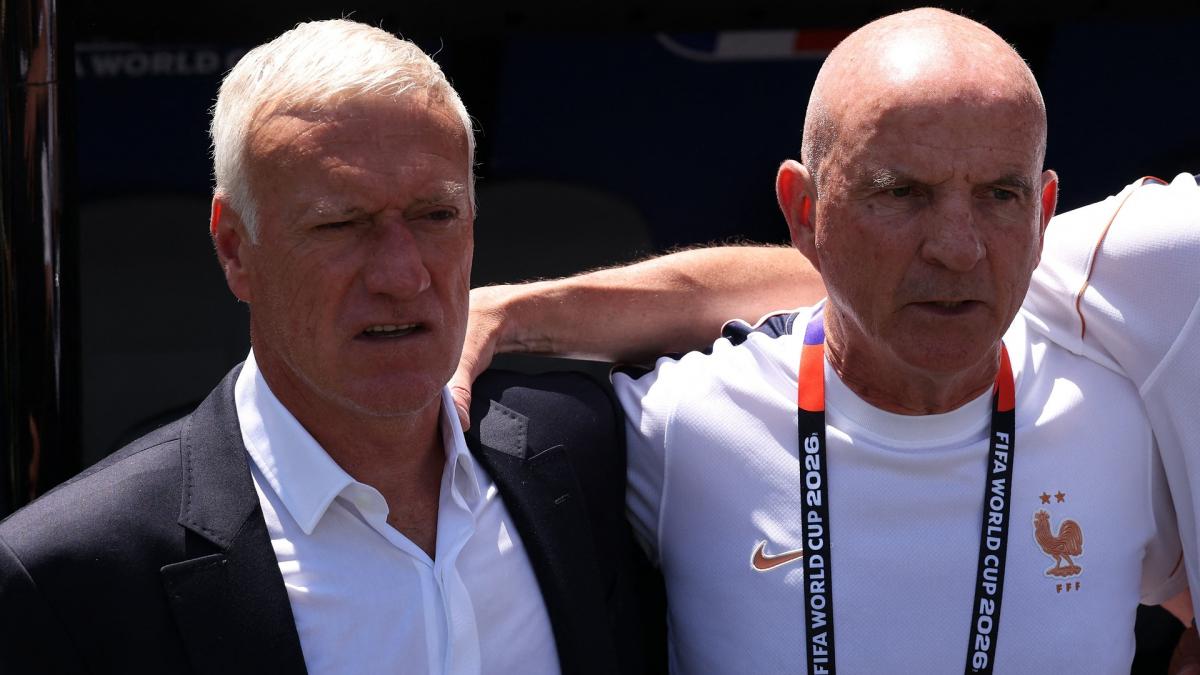
## Didier Deschamps Faces Selection Dilemmas
In the aftermath of France’s recent 3-1 win against Senegal in the opening match of the 2026 North American World Cup, Didier Deschamps has a pivotal decision to make regarding his squad. While the score reflects a solid performance, the overall display raised concerns about team dynamics, particularly in the offensive lineup. With an impressive pool of talent, the coach must navigate the challenges of selecting the best attackers without compromising balance.
## First Half Woes
The match illustrated troubling signs, especially during the first half. France struggled to penetrate Senegal’s defensive line, with the offensive quartet failing to harmonize effectively. Goals from Kylian Mbappé ultimately salvaged the day, but the initial half echoed doubts about individual performances. Ousmane Dembélé’s frequent disengagements, Désiré Doué’s lack of decisiveness, and Michael Olise’s invisibility culminated in a lackluster attack that struggled to make its mark.
While Rabiot, Upamecano, and Tchouaméni put forth a commendable effort to maintain stability, the offensive players’ inability to find rhythm left Deschamps pondering his tactical formation.
## Evaluating Key Players
### Dembélé and Doué: Missed Opportunities
Dembélé and Doué, both touted for their immense potential, arrive at a critical juncture in their careers. Dembélé’s performance was characterized by mobility that lacked the end product, often finding himself out of position and unable to execute decisive plays. Similarly, Doué’s early struggles showcased issues of overcomplication and hesitation, contributing to momentary lapses that gifted Senegal the opportunity to press.
While Doué’s second-half resurgence raised eyebrows, it remains insufficient to wash away the initial doubts that clouded his consistency. Time is not a luxury afforded to players at this level—especially during a World Cup.
### Rising Star: Bradley Barcola
Amid the uncertainty surrounding veteran players, Bradley Barcola emerged as a beacon of hope. His entry into the game marked a stark shift, as he injected much-needed depth and spontaneity into the French attack. Barcola’s impressive goal demonstrated a clear signal to Deschamps: he is ready to claim a more significant role.
With his addition, the overall tempo of the game evolved, highlighting the necessity of adaptability in a tournament setting. This raises a critical question for Deschamps: can he afford to overlook a player who so evidently changes the dynamics of the team?
## Future Considerations
As coach Deschamps reflects on the match, two names loom large: Mbappé, whose brilliance is undisputed, and Olise, who seems to have found his footing. It appears that their places in the starting eleven are increasingly assured. However, the future of Dembélé and Doué hangs in the balance; both must elevate their game or risk being eclipsed by emerging talents.
Another factor to consider is Rayan Cherki, who, despite his limited playing time, has also made a compelling case for inclusion.
## Conclusion: A Balancing Act
Victory against Senegal secured initial momentum for France, yet the path forward remains fraught with decisions about squad composition. Deschamps is faced with challenging selections as he seeks the optimal lineup to advance through the tournament. Time is of the essence, and the pressure is mounting—not just for France’s aspirations but for the players themselves. Striking a balance between established stars and rising potential may very well define the outcome of their World Cup journey.