
The Joyful Celebration of the Cape Verde Community in Argentina
A Historic Day in Dock Sud
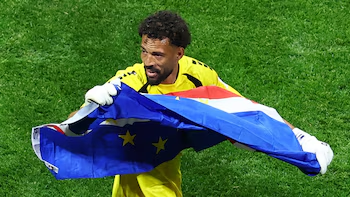
The Cape Verdean community of Dock Sud, situated in Avellaneda, Buenos Aires, experienced an atmosphere charged with tension, pride, and euphoria as they gathered to witness the momentous debut of the Cape Verde national football team in the World Cup. Competing against the formidable Spain, one of the tournament favorites, the day culminated in a stunning goalless draw that ignited spontaneous celebrations in the streets of Buenos Aires. Traditional Argentine soccer songs echoed through the neighborhood, reflecting the deep-rooted history of this vibrant community.
A Feat Worth Celebrating
For the Cape Verdean team, dubbed the “blue sharks,” achieving a draw against the reigning European champions was nothing short of remarkable, especially as it marked their first appearance in the World Cup. Group H, which also features Saudi Arabia and Uruguay, offers a challenging pathway for the underdogs, yet the absence of pressure allowed the players to showcase their talents with freedom and determination.
The Cape Verdean Union: A Heartfelt Connection
The emotional reaction among the community stemmed from their rich and storied past. The Mutual Aid Society “Cape Verdean Union”, established on August 13, 1932, served as a natural gathering point for many. Originally created to assist Cape Verdean immigrants facing significant hardships, the organization has evolved to promote and celebrate the cultural heritage of the islands. This historical institution symbolizes the resilience and togetherness of a community shaped by centuries of shared experiences.
A Rich Historical Presence in Argentina
The history of Cape Verdeans in Argentina dates back to the late 19th century, gaining momentum in the 1920s. The migration primarily consisted of individuals from the islands of São Vicente and Santo Antão, with smaller contingents from São Nicolau, Fogo, and Brava. Many arrived carrying Portuguese nationality, as Cape Verde was under Portuguese colonial rule, eventually transitioning to Argentine naturalization.
Notably, the archipelago’s colonization led to a unique diasporic identity, shaped by the intermingling of diverse ethnic groups. This complex cultural tapestry further solidified the community’s ties in Argentina, especially in Dock Sud, a haven for Cape Verdeans.
The Role of Climate and Colonial Legacy
Historically, the climatic challenges faced by the Cape Verde islands—characterized by arid conditions and irregular rainfall—have spurred migration. Coupled with the impacts of Portuguese colonial exploitation, these factors pushed many to seek better opportunities abroad, including settling in Buenos Aires.
Upon gaining independence in 1975 after a long struggle led by the African Party for the Independence of Guiné and Cape Verde (PAIGC), the Cape Verdean community continued its legacy of resilience. Prominent figures, such as Arístides María Pereira, the first president of Cape Verde, have established lasting connections with the Argentine community, reflecting the deep historical ties formed over decades.
A Vibrant Celebration of Heritage
As the final whistle blew during the World Cup match, the Cape Verdean Union in Dock Sud erupted into jubilant celebration. Descendants of those who fled colonial rule and environmental hardships joyfully embraced their team’s achievement, underscoring a shared identity and cultural richness built across generations. With soccer serving as a universal language, the community harmoniously intertwined their heritage with Argentine traditions, showcasing their unity and hope for the future, encapsulated in this historic draw against Spain.