
The Legacy of Leonardo da Vinci’s Notebooks
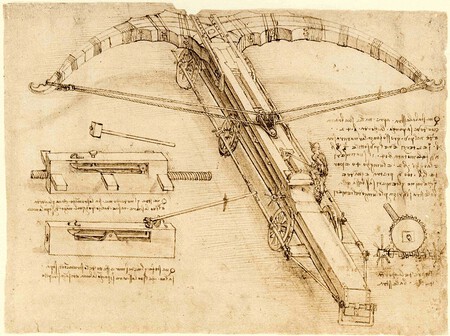
When he died in 1519, Leonardo da Vinci left behind not only his iconic paintings but also a treasure trove of personal notebooks filled with notes, illustrations, and the remarkable mirror writing he often used. These notebooks, essential for comprehending the full scope of his genius, suffered a tragic fate in the 16th century due to an ‘act of editorial vandalism’ that has influenced our understanding of his legacy for centuries.
An Unfortunate Legacy
Francesco Melzi, a lesser-known painter of the 16th century, played a critical role in the inheritance of Da Vinci’s legacy. Melzi, who was a disciple of Da Vinci, became the executor of his estate upon his death. However, the vast collection of manuscripts eventually landed in the hands of Pompeo Leoni, a sculptor who made a disastrous decision to dismember Da Vinci’s notebooks for the sake of ‘reorganization.’
The Dismemberment of a Genius
Leoni’s arbitrary system of separation led to the chaotic division of annotations that Da Vinci had meticulously recorded. He categorized the notebooks into two main codices: one for technical and scientific materials and another for artistic works. This separation was not merely a physical act; it distorted the context and interconnectedness that Da Vinci intended.
From Italy to England
The fallout from this dismemberment did not end with Leoni. His son-in-law, Polidoro Calchi, further exacerbated the situation by selling off the remnants of Da Vinci’s work, scattering them across continents. One codex eventually found its way to the Veneranda Biblioteca Ambrosiana in Italy, while the other reached the Royal Collection in England.
Righting a Historical Wrong
After over 400 years of fragmentation, a significant step has been taken to amend the missteps of the past. The Italian embassy in the UK, along with various cultural institutions, launched Leonardotheka 2.0, a digital library designed to reunite Da Vinci’s most significant works. This initiative aims to provide accessible consultations of his manuscripts, finally giving us a coherent understanding of Da Vinci’s thoughts and methods.
3,500 Pages Reunited
Leonardotheka 2.0 serves as a virtual unification of around 3,500 pages that had been separated since the end of the 16th century. It integrates the 1,119 folios of the Codex Atlanticus and 550 pages from the Royal Collection, amounting to possibly one-third of Da Vinci’s remaining legacy.
Why This Matters
The Leonardotheka project is monumental for several reasons. It reconstructs the original state of Da Vinci’s manuscript legacy prior to Leoni’s interference, allowing a deeper insight into the Renaissance mindset that Leonardo exemplified. The intermingling of scientific and artistic expressions that Da Vinci embodied is once again brought to the forefront.
Filling the Gaps in History
This effort not only revives the complexity of Da Vinci’s work but also reconciles damaged manuscripts. For instance, experts have successfully linked a sketch of a horse to notes on an equestrian monument in the Codex Atlanticus, providing a clearer context of Da Vinci’s ambitious projects.
A Bright Future for Renaissance Studies
Leonardotheka 2.0 is not merely a digital repository; it’s a tool that enhances our understanding of a pivotal period in European history. Using innovative digital tools, researchers can rediscover the interconnected nature of Da Vinci’s legacy and stimulate new interpretations of his work and its impact. In correcting the historical errors imposed nearly 500 years ago, we come closer to appreciating the full breadth of Leonardo da Vinci’s genius.