
Guatemala’s Urgent Call for Statistical Reform
Fragmented Data Systems
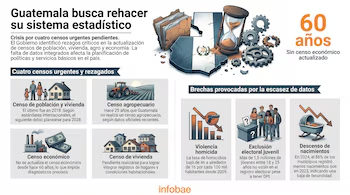
Carlos Mendoza, the secretary responsible for the initiative “The Power of Data,” has highlighted a significant issue in Guatemala’s public information landscape. With data scattered and without adequate geographic integration, the country faces challenges in planning policies, budgets, and essential services effectively. This concern is urgent, as Mendoza has identified four critical censuses—population, housing, agricultural, and economic—that are overdue. The last population census was conducted in 2018, when the next was supposed to occur in 2028 per international standards; however, delays may push it close to 2029.
Censuses in Crisis
The situation is even more alarming regarding other crucial censuses. The agricultural census has not been conducted in 25 years, while the economic census has not been updated for an astounding 60 years. Mendoza stresses that it’s not merely about gathering statistics—there’s a pressing need to integrate both statistical and geographic dimensions in these assessments.
Institutional Overhaul Needed
To address the fragmentation of data, Guatemala is looking to overhaul its institutional framework. Mendoza has called for a rethinking of the National Statistical System and the National Statistics Institute, which was established in the 1980s. He emphasizes that the current data production methods remain dispersed and fragmented, undermining effective governance.
Administrative Records: The Key to Integration
Beyond merely improving censuses and surveys, Mendoza argues for the enhancement of administrative records produced daily by public institutions. Ensuring that data from health, education, and social protection sectors are interconnected is crucial for timely and informed decision-making.
Case Studies: The Power of Data
Mendoza illustrated the significance of data with several public policy case studies:
Homicidal Violence
In terms of violence, he noted a dramatic decline in homicide rates from 46 per 100,000 inhabitants to around 16 or 17. This transition, driven by data, enabled policymakers to see trends that were previously overlooked.
Electoral Exclusion
Another critical point Mendoza raised was the exclusion of over 1.5 million young citizens aged 18 to 25 from voting. Despite being of legal age, many are not listed in the citizen registry due to bureaucratic inefficiencies stemming from the 1985 Constitution.
Demographic Shifts
Lastly, concerning demographic trends, Mendoza reported that 86% of municipalities recorded fewer births in 2024 than in 2023. This decline raises alarms about future impacts on education, healthcare, and social welfare systems.
International Support for Reform
International agencies, including the United Nations and the World Bank, have pledged support for these initiatives. Miguel Barreto, the UN’s resident coordinator, stated that the aim is to strengthen Guatemala’s statistical framework comprehensively, including the use of data for public finances and poverty measurement.
Conclusion
The reforms proposed by Secretary Carlos Mendoza are vital for facilitating better governance in Guatemala. By creating an integrated, transparent statistical system, the country can improve its planning and service delivery, ultimately leading to a more informed and functional society. The need for action is urgent, and with the backing of international entities, Guatemala stands at a critical juncture in its quest for data-centric governance.