
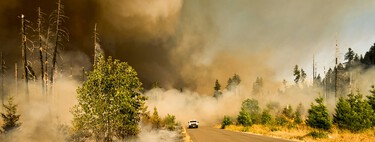
Spain’s Unused Biomass: A Crucial Resource Against Summer Fires
The summer of 2025 revealed an alarming trend in forest management across Europe, particularly in Spain. With over 403,000 hectares scorched by wildfires, it becomes evident that tackling the issue requires more than just firefighting. The success depends on proactive forest management throughout the year.
Understanding the Crisis: Increasing Ferocity of Fires
The statistics tell a grim story. According to the Copernicus Atmospheric Monitoring Service, Europe recorded unprecedented fire emissions, leading to almost 13 megatonnes of carbon released into the atmosphere. Although the number of fires in Spain fell to 217 in 2025, the area burned was significantly larger. This paradox indicates that while fires may not be occurring more frequently, they are intensified by the accumulated biomass—a situation exacerbated by decades of poor management.
The Weight of Unused Biomass
Currently, Spanish forests are adding 46 million cubic meters of plant biomass each year. Yet, only about 40% of this biomass is put to good use, which is well below the European average of 65-70%. The leftover dry branches, leaves, and weeds create a dangerous environment, often termed “fuel loading.” Regions such as Galicia and Extremadura have already witnessed the devastating impact of this accumulation firsthand.
Historical Context: The Roots of the Problem
The roots of Spain’s biomass crisis can be traced back to years of rural exodus and the abandonment of traditional forest management practices. This lack of attention has allowed forests to become overgrown, transforming them into tinderboxes ready to ignite at the slightest spark. The Spanish Biomass Association (AVEBIOM) has highlighted that the neglect of sustainable practices leaves our forests vulnerable.
Proactive Measures: Moving Beyond Firefighting
A recent initiative by Bioenergy Europe at the European Parliament underscores the necessity for early action against forest fires. With the documentary “Fuel the Solution, Not the Fire,” it is clear that the solution involves sustainable biomass management. This approach has proven effective in countries like Greece and Italy, showcasing the benefits of reducing fuel loads while producing renewable energy and invigorating local economies.
The Model: Turning Waste into Energy
The proposed model collects unused biomass from sustainable forestry practices and transforms it into bioenergy. This process involves chipping and pelletizing plant residues to fuel various facilities such as schools and hospitals. Pablo Rodero of AVEBIOM asserts that this not only cleans up the forests but also contributes to local energy satisfaction and economic activity. The focus shifts from merely a firefighting strategy to an ongoing management model that enables preventive measures throughout the year.
Real-World Impact: Success Stories
For instance, Veolia Biomass reported transforming over 300,000 tons of forest biomass into 700 GWh of clean energy in 2024. This is enough to power more than 200,000 homes. Similar projects in various Spanish provinces, including Zamora and Valladolid, demonstrate the feasibility of sustainable biomass management while highlighting its potential to mitigate fire risks.
The European Context: A Lifeline for Renewable Energy
Bioenergy is becoming a cornerstone of Europe’s renewable energy landscape, contributing to 60% of total renewable output. The stability and availability of this resource, which is locally sourced, make it a strategic asset for nations across Europe. With ongoing efforts to set up 200 new heat networks in Spain by 2030, the potential to utilize an additional 1.2 million tons of biomass per year is attainable.
Facing the Challenges: Regulatory Hurdles
Despite the optimistic outlook, the biomass sector encounters significant regulatory uncertainties. The EU’s Renewable Energy Directive (RED III) could impose even stricter sustainability criteria, complicating the use of forest residues. AVEBIOM warns that if barriers continue to exist, the cycle of biomass accumulation will persist, leading to more wildfires.
Conclusion: A Call for Integration
With the next fire season looming, the urgency for integrated forestry, energy, and rural development policies has never been more pressing. For years, the technical know-how and resources have been in place, yet the disconnection among policy areas remains a significant barrier. The time has come for coordinated actions that can not only protect our forests but also leverage their potential as a shield against the escalating threat of summer fires. Without intervention, we risk facing another devastating fire season, as our forests continue to burn.