
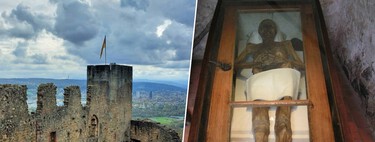
The Discoveries of Ötzi: A Frozen Time Capsule
In 1991, two German hikers stumbled upon a remarkable find in the Ötztal Alps: the body of Ötzi, an ancient man who lived around 3255 BC. Initially thought to be a recent corpse, further investigations revealed that Ötzi is the oldest known natural human mummy in Europe, preserved by glacial ice. He died at approximately 46 years of age from an arrow wound, making him a significant archaeological find that has dazzled scientists and historians alike.
The Iceman as an Ecosystem
Recent studies have taken a fascinating turn, revealing that Ötzi is not just a mummified body but also an ecosystem. The Eurac Research team has uncovered various strains of yeast and bacteria that have survived for over 5,300 years. Notable microbial strains include Glaciozyma, Goffeauzyma, Mrakia, and Phenoliferia, which are specially adapted to cold environments. These microorganisms have remained dormant within Ötzi’s body, demonstrating remarkable resilience.
Microbial Life Inside Ötzi
Among the findings are anaerobic bacteria such as Romboutsia hominis, Clostridium moniliforme, and Ruminococcus bromii. These bacteria played an essential role in Ötzi’s digestion during his life, indicating that ancient humans had different gut microbiomes compared to modern populations.
Implications of the Findings
The discovery of living microorganisms within Ötzi holds immense significance for both biology and archaeology, with far-reaching implications that may even extend to space exploration:
- Biological Milestone: The survival of microbes for millennia suggests that similar microorganisms could withstand harsh environments beyond Earth, such as the Moon’s south pole. This challenges our understanding of life’s adaptability and informs the quest for extraterrestrial organisms.
- Archaeological Insights: The presence of microbial life in mummies compels researchers to rethink preservation methods for archaeological samples. Ensuring the careful handling of such finds is crucial to retain invaluable microbial information.
Health Insights from the Past
Comparing Ötzi’s microbiome with contemporary human microbiomes sheds light on the evolution of human health. Some gut bacteria present in Ötzi are still found in modern humans, while others have vanished with the rise of antibiotics and processed foods. This comparison offers valuable insights into historical dietary impacts and potential health issues in today’s population.
Research indicates that the loss of ancestral microbial diversity is linked to diseases like Crohn’s and ulcerative colitis. Ötzi’s microbiome lays the groundwork for developing more effective probiotics and enhancing fecal microbiota transplants.
Preserving the Iceman
Ötzi is currently on display at the South Tyrolean Archaeology Museum in Bolzano, Italy, maintained under strict environmental controls of -6°C and 99% relative humidity. Scientists continuously study him, using diverse methods to distinguish between original microorganisms and those introduced during modern research. This involves genomic sequencing and laboratory cultures to gain a clearer picture of Ötzi’s original microbial community.
Challenges and Future Research
Despite the groundbreaking discoveries, challenges remain. Contamination during handling poses risks to the integrity of the samples, complicating efforts to accurately reconstruct Ötzi’s original microbiome. Moreover, proving that dormant yeasts have been active continuously for 5,300 years requires further independent studies involving other glacier mummies.
In conclusion, Ötzi stands as a captivating link between the past and present, opening doors to discussions on human health, microbial diversity, and the resilience of life itself.