
The Legacy of Helicopter Rescues
In April 1944, a small Sikorsky YR-4 helicopter ventured behind enemy lines in Burma, marking a pivotal moment in military history. It executed the first military combat rescue using a helicopter, successfully recovering four isolated soldiers. This operation opened a new era for personnel recovery under enemy fire, setting the stage for dramatic advancements in military capabilities.
Tensions Escalate: The Apache Incident
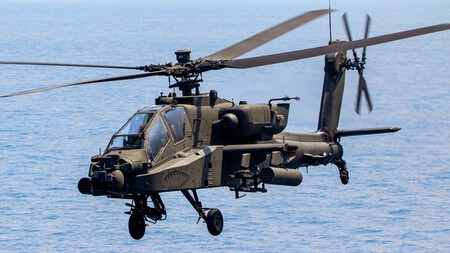
Fast forward over 80 years, and the geopolitical landscape remains fraught with tension. Recently, a U.S. AH-64 Apache attack helicopter was reportedly shot down in the sensitive waters of the Strait of Hormuz, an area pivotal for global oil transit. The incident threatens to unravel the fragile truce between the U.S. and Iran, with conflicting narratives regarding whether the helicopter was downed by Iranian forces or an attacking drone.
Unfolding Political Reactions
In the aftermath, President Trump quickly called for a military response, stating the necessity for the U.S. to retaliate. Meanwhile, U.S. Central Command announced targeted strikes against Iranian positions. This rapid response highlights the tense and volatile nature of U.S.-Iran relations, fueled by a history of confrontations and blockades.
Revolutionary Rescue Operations
Amidst the skirmishes, the true groundbreaking moment came when two crew members were rescued using an autonomous naval drone, marking a significant leap in combat search and rescue technology. Unlike traditional missions that depend on manned helicopters, this operation utilized a drone, demonstrating capabilities that were previously confined to the realms of science fiction.
Introducing the Corsair Drone
The drone responsible for this historic recovery is the Corsair, developed by Saronic Company and operated by the U.S. Navy’s Task Force 59. This unmanned vessel, measuring 7 meters in length, boasts a remarkable sailing range of over 1,800 kilometers and high autonomy. Initially designed for maritime surveillance, its successful deployment in this rescue operation signifies a new frontier in military technology.
Shifting Paradigms in Rescue Operations
The use of the Corsair drone represents a critical shift. Traditionally, search and rescue missions involved high-risk manned operations. Now, the ability to deploy autonomous drones offers a safer alternative, allowing for the secure retrieval of personnel in hostile environments without jeopardizing human lives. This advancement provides a new avenue for military operations, significantly reducing risks in high-intensity conflicts.
Beyond the Strait of Hormuz
The implications of this incident extend beyond the Strait of Hormuz. The U.S. Navy envisions a network of autonomous vessels across various regions, particularly in the Pacific, that can monitor maritime routes and facilitate military actions while ensuring the safety of pilots or crew members in distress.
The Dawn of a New Era
The war in Ukraine has already transformed the battlefield by introducing drones as key players in combat. However, this Apache incident hints at an even broader evolution. The new paradigm is not just about employing drones for offensive tactics but entrusting them with missions that were once solely human responsibilities.
In summary, the successful recovery of the Apache crew signifies a significant milestone in military history, capturing a moment when drones transcended their roles as mere weapons to become essential components in rescue operations. This evolution may represent the dawn of a new era in military strategy, reshaping how we view the possibilities of autonomous technologies in warfare.