
Unique Museum Experience in Switzerland
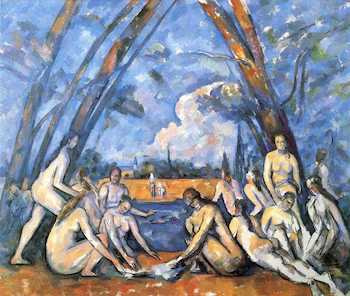
Recently, in Switzerland, the Beyeler Foundation hosted an innovative exhibition featuring Paul Cézanne’s works titled “The Bathers.” This initiative attracted attention by allowing free entry to participants dressed in bathing suits. The proposal transformed a typical museum visit into an engaging beach-like atmosphere where visitors interacted with the artwork in a relaxed, open manner.
The Concept Behind the Experiment
This intriguing idea, proposed by artist Maurizio Cattelan, effectively blurred the lines between spectator and artwork. For many attendees, donning swimwear symbolized a deeper connection to the art, allowing them to become “a kind of work of art within the museum.” In a world increasingly dominated by social media trends and distractions, this method proved remarkably effective in attracting visitors’ attention.
Encouraging Participation Through Creativity
This social experiment raises critical reflections about education and engagement. Imagine if students were rewarded with extra points for dressing according to their exam topics! Such creative involvement could foster a more immersive learning environment, generating laughter, interest, and collaborative engagement. This approach could shift traditional learning paradigms and enhance the educational experience.
Capturing Attention in a Distracted World
Organizations, including corporations, can learn from this model. In training sessions, finding ways to markedly capture attention has become essential. The classical AIDA (Attention, Interest, Desire, Action) model is still relevant but needs adaptation for today’s context—where smartphones and social media compete incessantly for our focus.
Transformative Approaches Across Institutions
Various institutions embrace similar transformative strategies. From bringing prehistoric dinosaurs into city streets to merging art and interactive storytelling, they create engaging narratives for visitors. The goal remains consistent—reduce the distance between the audience and the experience and make them active participants.
The Deeper Significance of the Experience
Ultimately, the experiment in Switzerland challenges us to reconsider how we engage with art and learning. It’s no longer solely about better explanation; it’s about crafting experiences that resonate on an emotional level. When people participate actively, they transition from mere spectators to involved learners, paving the way for lasting knowledge and personal growth.