
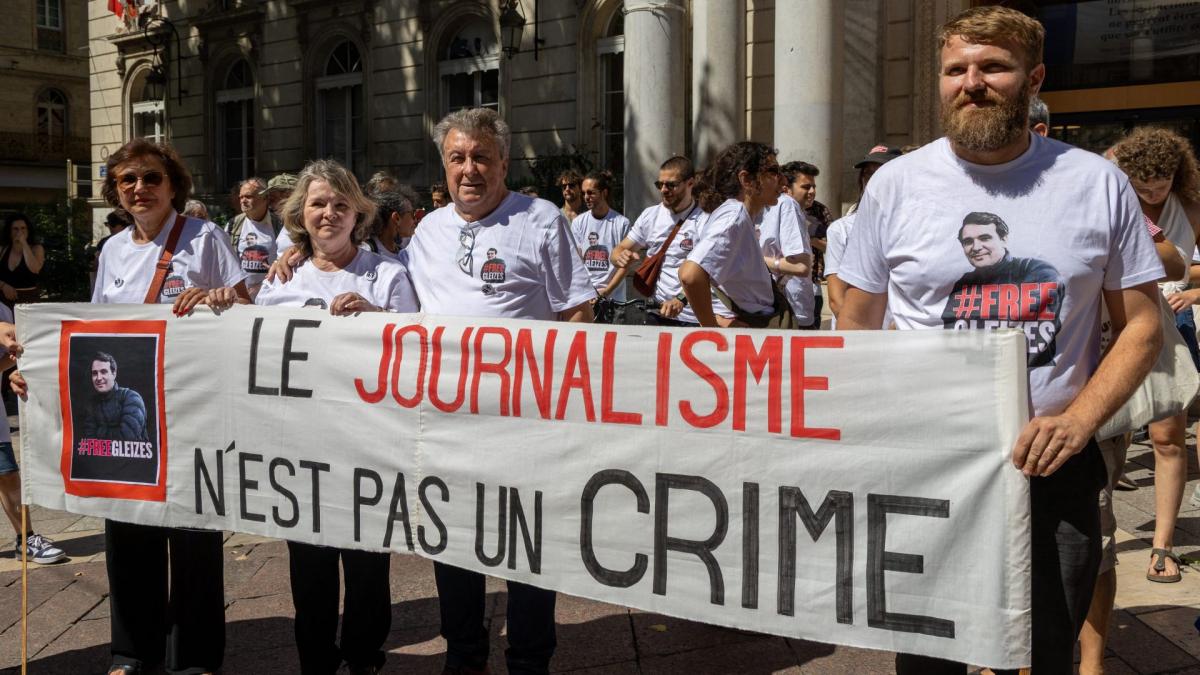
## Appeal for Clemency: The Case of Christophe Gleizes
The French Football Federation (FFF) has taken a significant step regarding the plight of Christophe Gleizes, a French sports journalist currently serving a seven-year prison sentence in Algeria. This development has sparked conversations around journalism, freedom of expression, and the relationship between France and Algeria, especially in light of the upcoming 2026 FIFA World Cup.
### Background of the Case
Christophe Gleizes was arrested in May 2024 in the Kabylie region while working on a report about the local football club, JS Kabylie. He was convicted in June 2025 for what Algerian authorities deemed an “apology of terrorism,” a serious charge that has raised eyebrows internationally. His conviction was upheld by a higher court in December 2025, leaving his situation precarious.
### The FFF’s Plea for Clemency
Philippe Diallo, the president of the FFF, publicly called upon Algerian authorities to reconsider Gleizes’ harsh sentence. In a statement made just days before the 2026 World Cup, Diallo emphasized that a gesture of mercy would allow Gleizes, a dedicated football enthusiast, to reunite with his family during a momentous occasion in the sports world. Diallo’s remarks highlight the emotional weight of the World Cup and the connection it fosters among families and football fans globally.
### Legal Proceedings and Current Status
According to Gleizes’ legal team, all legal avenues for appeal have been exhausted. His lawyers have stated that the next steps rely heavily on the discretion of Algerian President Abdelmadjid Tebboune, who has the authority to grant a pardon. This places the responsibility squarely on the shoulders of Algeria’s leadership, sparking discussions on the balance between national law and human compassion.
### The Broader Implications
Gleizes’ case illuminates the fraught relationship between Algeria and France, rooted in historical tensions and modern political dynamics. The call for clemency from the FFF may have implications beyond the immediate legal context. It brings to the forefront issues surrounding press freedom and the treatment of journalists in foreign countries. As the international community closely watches, Algeria’s response could set a precedent for how similar cases are handled in the future.
### What Comes Next?
As the 2026 World Cup approaches, it remains to be seen whether Gleizes will be granted mercy. The decision rests on political considerations that transcend sports, making it a focal point for discussions on freedom of expression, the responsibilities of governments, and the potential for reconciliation through sport.
In conclusion, the situation surrounding Christophe Gleizes serves as a reminder of the complexities involved when journalism and legal jurisdictions intersect. The FFF’s appeal for clemency not only seeks to reunite a football fan with his family but also addresses broader societal concerns, reflecting the ongoing dialogue about the rights and responsibilities of journalists worldwide.