
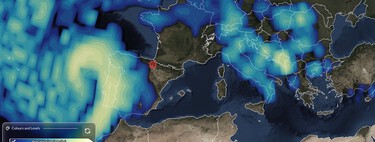
Spain’s Rising Temperatures: A Reality Check
As summer approaches, a familiar refrain echoes through conversations across Spain: “Every year it gets hotter; summers were never like this.” While some may dismiss this sentiment as nostalgia, the data tells a different story. Spain is indeed experiencing markedly hotter summers.
Official Confirmation of Rising Temperatures
Recent studies, supported by credible entities such as the State Meteorological Agency (AEMET) and the Ministry for the Ecological Transition, reveal a startling truth: the average summer temperature in Spain has surged by approximately 2°C over the past three decades. This upward trend is alarming—not only are daytime temperatures on the rise, but the nights are also becoming increasingly uncomfortable.
Historical Data Highlights
The Sustainability Observatory reports that when comparing the decades of 1969-1978 to 2009-2018, the average summer temperature transitioned from 21.4°C to 23.8°C. This translates to an increase of 2.4°C. More recently, MITECO and AEMET data show that the summer of 2025 set records, with a peninsular average temperature of 24.2°C—an astonishing 2.1°C above historical averages.
Lengthening Summers
The duration of summer heat has noticeably extended. According to AEMET Open Data, the current climatological summer lasts five weeks longer than it did in the 1980s, encroaching upon the typically cooler seasons of spring and autumn at a rate of 9 days per decade. Overall, since 1975, the summer heat period has expanded officially by 20 days.
Urban Heat Islands
Urban areas are particularly affected by rising temperatures. A study by the Polytechnic University of Catalonia, which analyzed climate data from 1971 to 2022, reveals a disturbing increase of 3.54°C in summer temperatures in major Spanish cities. The urban landscape, with its asphalt and concrete, acts as a heat sink, exacerbating the overall increase.
The Emergence of Tropical Nights
In the past, many eagerly awaited the cooling relief that nighttime brought during summer. Now, however, the phenomenon of “tropical nights”—nights where temperatures do not drop below 20°C—is increasingly common. Approximately 32 million Spaniards are affected by these stifling nights, which have increased by an average of 6 days in the last 50 years.
Regional Disparities
In regions such as Andalusia, Murcia, and the Valencian Community, the situation is more acute. Citizens now endure 12 more tropical nights annually compared to previous decades. This shift has significant ramifications for health and comfort, prompting many to rely on air conditioning or fans to cope with the oppressive heat.
Conclusion: The Need for Action
With the evidence mounting, it is clear that the need to address climate change is urgent. Experts like Raffaele Bernadello emphasize that capturing CO₂ is essential in mitigating these temperature rises. As Spain experiences these stark changes, it is critical for individuals, communities, and governments to take actionable steps towards a more sustainable future.