
WASP-94A b: Anomalies Discovered
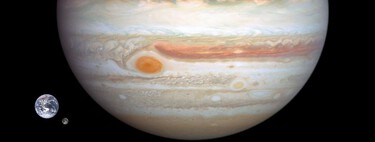
In 2014, astronomers uncovered the exoplanet WASP-94A b, a hot Jupiter that initially displayed puzzling atmospheric characteristics. Observations revealed a strikingly high concentration of oxygen and carbon—hundreds of times that found in Jupiter’s own atmosphere in our Solar System. Given these surprising findings, scientists found themselves at a crossroads, questioning the standard models of planetary formation.
The Role of the James Webb Space Telescope
Recent investigations using the James Webb Space Telescope (JWST) have shifted the narrative. It turns out the real issue wasn’t the planet itself or the models, but the limitations of earlier observational tools like the Hubble Space Telescope. While Hubble provided initial insights, it lacked the capacity to distinguish between the various gases in the atmosphere. JWST, on the other hand, offers a more precise examination, akin to clearing a foggy window to witness the details inside.
Revisiting Oxygen and Carbon Levels
JWST’s findings show that the levels of oxygen and carbon in WASP-94A b’s atmosphere are far lower than initially reported. Instead of hundreds of times higher, they are now believed to be only five times greater than those of Jupiter. This adjustment aligns with our understanding of the laws of physics and existing models of exoplanet atmospheres.
Unique Atmospheric Phenomena
Interestingly, JWST also revealed that WASP-94A b has rocky clouds during the day that dissipate at sunset. This unique cycle of cloud formation introduces a fascinating dynamic to the planet’s atmospheric composition.
Understanding Tidal Lock
WASP-94A b is tidally locked, meaning it has an unchanging face towards its star. Half of the planet experiences perpetual day while the other half is cloaked in darkness. On this planet, the intricacies of atmospheric dynamics are showcased as gases flow between the sunrise and sunset sides.
The Significance of Transit Studies
An in-depth examination using JWST’s transit observations allowed scientists to study the gas emissions at the transition zones of sunrise and sunset. Notably, the telescope confirmed the presence of silicate clouds—rocky clouds—on the sunrise side. These clouds were found to vanish as one transitions to the evening side, providing a clearer picture of the atmosphere during these phases.
Exploring the Mystery of Cloud Behavior
The reasons behind the unique cloud behavior remain largely a mystery, but two hypotheses have been proposed.
Fog-like Formation: One theory suggests that clouds form in darkness on the night side, becoming vaporized during the scorching temperatures on the day side, only to reappear as temperatures drop each night.
Extreme Winds: Another hypothesis posits that intense winds may be sweeping the clouds into the planet’s interiors, rendering them invisible as sunset approaches.
Future Research Directions
Scientists are not stopping with WASP-94A b. They are currently investigating other similar hot Jupiters, such as WASP-39 and WASP-17 b, aiming to capture a broader understanding of these celestial bodies. The parallel studies will enrich our knowledge and potentially resolve the remaining uncertainties regarding these exoplanets.
Conclusion
The James Webb Space Telescope has redefined our understanding of WASP-94A b, correcting earlier misconceptions and revealing complex atmospheric phenomena. As we continue to explore these outer worlds, the secrets of planetary formation will gradually unfold, ensuring that the cosmos continues to surprise us.