
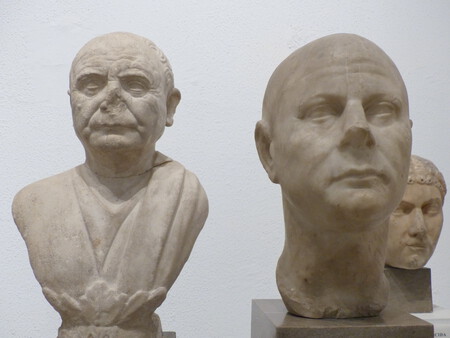
The Peculiar Hobby of Statue Recycling in Hispania
In the British Museum, a remarkable bust of Emperor Vespasian from the 1st century carries an unexpected secret. While it appears to depict Vespasian, it is, in fact, a transformed likeness of Nero. This metamorphosis was achieved by a sculptor who reshaped Nero’s features into those of Vespasian, reflecting a fascinating trend of recycling imperial statues during the Roman Empire.
Understanding Recarving: A Roman Tradition
The practice, known as recarving, involved altering the appearance of existing sculptures to reflect new political sentiments or aesthetic standards. Archaeologists Francesca Bologna and Raffaella Bucolo investigated this intriguing phenomenon, examining 2,028 imperial busts made from 27 BC to 285 AD. Their findings revealed that many sculptures originally depicting one emperor were transformed into representations of others—an essential insight into Roman cultural and political dynamics.
Why Recycle Statues?
The million-dollar question is: why did Roman sculptors engage in this practice? Bologna and Bucolo suggest practical reasons—such as saving time and resources by reusing marble from older busts. However, the reasons go deeper, encompassing complex ideological motivations as well.
Regional Variations in Recarving
The study illustrates that the frequency of recarving varied considerably across the Roman Empire. For example, during the Antonine Dynasty, the practice saw a decline due to changes in fashion, particularly the emergence of thick beards and elaborate hairstyles that earlier busts could not accommodate.
Statistical Insights
Bologna and Bucolo noted that only 8% of the analyzed busts in the Empire displayed signs of recarving. In Rome, this percentage was slightly higher at 11%, while regions like Asia Minor or North Africa showed rates below 5%. However, in Hispania, the rate surged to 19%, highlighting it as a significant hub of statue recycling.
Political Motivations Behind Recarving
Recycling imperial busts often had political implications. In some cases, a sculpture of a despised emperor, like Caligula, could be recast as a respected predecessor, such as Augustus. This practice served as a powerful propaganda tool, allowing contemporary rulers to build legitimacy by aligning with admired past figures.
The Concept of Damnatio Memoriae
One of the most compelling aspects of this practice relates to damnatio memoriae, or the “condemnation of memory.” This Roman custom involved purposefully erasing a figure’s existence from memory and history, often more demonstrative than execution itself. The case of Crispus illustrates this point where not only was he executed, but all traces of his existence were systematically removed.
The Dual Nature of Memory
Interestingly, the recarving of busts sometimes aimed to achieve the opposite effect: the translation memoriae, which sought to transfer the favorable image of a past ruler to a present one, reinforcing the legitimacy of the new ruler.
Conclusion: An Art Form of Political Expression
The art of recarving in ancient Rome was more than a simple act of sculpture modification; it was a complex, multifaceted practice embedded deeply in the socio-political fabric of the empire. In Hispania, the techniques employed showcased local elites’ aspirations and attitudes, making it a unique chapter in Roman art history. As the ancient world navigated political complexities, the mere act of reshaping a statue became a profound statement on identity, memory, and power.