
Brazil’s Aerospace Triumph: The Gripen E Fighter Jet
In 1969, Brazil made a bold move that many considered ambitious for a developing nation: it created a state-owned company, Embraer, to manufacture its own aircraft. Fast forward over fifty years, and this decision has transformed Brazil into the third-largest aerospace manufacturer globally, trailing only Boeing and Airbus. Remarkably, the momentum has propelled it to the forefront of advanced aerospace technology, positioning Brazil as a key player outside traditional powerhouses.
A Milestone Beyond Defense
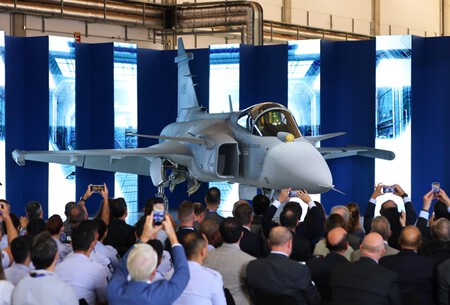
Brazil celebrated a historic achievement with the rollout of the first supersonic fighter jet assembled on its soil. This event marks a significant milestone that extends far beyond military capability. It symbolizes Brazil’s entry into an elite league of nations that can design and produce advanced military aircraft. For decades, such industrial levels seemed restricted to a select few global powers.
In a region predominantly reliant on importing innovative defense solutions, Brazil’s accomplishments ensure it is not just a consumer but now part of an exclusive club of nations capable of manufacturing supersonic combat aircraft.
The Road to the Brazilian Gripen
The journey began with a 2014 contract between Brazil and Swedish manufacturer Saab, which covered the acquisition of 36 Gripen aircraft. However, the agreement emphasized more than mere purchase; it included technology transfers, engineer training, and direct participation by Embraer in the assembly process.
A decade later, this collaboration culminated in the first Gripen E leaving the factory in Gavião Peixoto, Brazil. While the design remains Swedish, this partnership has facilitated the development of capabilities in Brazil that would likely not have emerged from simple foreign purchases.
Joining the Elite Club of Aeronautics
While creating commercial aircraft is complex, developing modern fighter jets demands an even higher level of expertise. Currently, only a handful of countries, including the United States, France, Russia, China, and Sweden, possess the complete capability to design and manufacture supersonic fighters from scratch. Although Brazil has not yet reached this stage, it has achieved something unprecedented in Latin America: the local production of a front-line fighter jet, capable of operating in the most demanding scenarios of modern warfare.
This accomplishment signifies a monumental leap for Brazil’s technological landscape and positions it as a leader in aerospace developments in the continent.
More Than Just a Fighter Jet
The Gripen E represents Brazil’s commitment to technological sovereignty. Through domestic assembly, maintenance, and modernization, the Brazilian armed forces can reduce their reliance on external markets, thus strengthening their operational autonomy. Moreover, this project has fostered the creation of valuable expertise, new supply chains, and a comprehensive industrial base that fortifies Brazil’s positioning in sophisticated aerospace programs.
The Impact on Brazil’s Global Position
The significance of this aerospace program transcends merely counting aircraft. It shapes Brazil’s emerging status on the global industrial map. While many Latin American nations remain dependent on exporting raw materials or importing advanced technologies, Brazil is building a self-sufficient industry capable of competing in some of the most intricate and lucrative sectors worldwide.
The rollout of the first assembled Gripen in Brazilian territory marks a transformative moment. No longer just a consumer, the country is becoming a producer of advanced defense technology. This achievement might not ignite the same fervor as a World Cup victory, but for the region’s industrial history, it stands as an exceptional accomplishment that will pave the way for future generations in aerospace technology.