
Solar Panels on Slurry Ponds: A Sustainable Innovation in Aragon
In Aragon, the livestock industry is transforming its environmental challenges into opportunities by covering slurry ponds with solar panels. This innovative solution not only addresses the pressing issue of waste management but also leverages renewable energy for the farms.
An Environmental Challenge
Aragon is home to over 4,000 pig farms, a significant contributor to Spain’s position as a leading pork producer in the European Union. However, alongside meat production, these farms generate massive quantities of slurry—over 60 million tons annually. The management of this waste presents considerable environmental challenges, as the slurry emits harmful gases such as methane, ammonia, and nitrous oxide when stored in ponds.
The Solar Solution
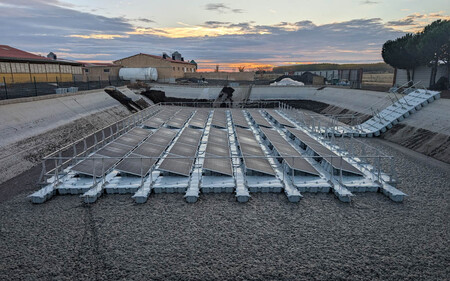
To combat this environmental issue, a consortium led by the Aragonese firm Intergia Energía Sostenible has devised a groundbreaking plan: covering slurry ponds with floating solar panels. This model represents a double advantage—reducing emissions while enhancing energy production.
A Win-Win Approach
The initiative, spanning from 2020 to 2023, was supported by the European EAFRD fund and the Government of Aragon. By deploying solar panels atop slurry ponds, farms can significantly lower their pollution levels while simultaneously generating renewable energy. This solution effectively turns waste management areas into productive sites for energy generation, negating the need for conventional land use for solar installations.
Innovations in Floating Photovoltaics
Intergia’s research has revealed several key findings about the slurry’s corrosive effects on photovoltaic systems. Ammonia in the slurry can degrade specific components, prompting the team to develop improved materials for these installations. This research has led to the creation of prototype systems designed specifically for slurry ponds while still applying lessons learned from successful floating solar applications in other water bodies.
Pilot Projects in Practice
Two pilot projects were launched to test the viability of these floating solar systems. The first prototype, established in Calzada de Tera, Zamora, features a floating platform that covers 90% of an 880 m² pond and boasts a peak power capacity of 33.04 kWp. This setup is expected to offset up to 22% of the farm’s electricity costs.
In Tauste, Zaragoza, another prototype with specialized components was developed, focusing on reducing the air-slurry contact area and facilitating installation. This system is designed to produce 15.2 MWh per year, potentially covering 53% of that farm’s energy demand.
Future Directions
As these projects evolve, Intergia aims to monitor emissions and energy production closely to identify the most effective systems. This ongoing research will help refine their approach and pave the way for broader adoption of floating solar installations across the agricultural sector.
Conclusion
The integration of solar panels into slurry ponds is a prime example of sustainability in action. This innovative approach not only mitigates environmental issues but also supports the energy needs of the pig farming sector in Aragon. As the agricultural industry continues to evolve, such forward-thinking solutions will be key to achieving a more sustainable and eco-friendly future.