
## UEFA’s Referee Selection Controversy
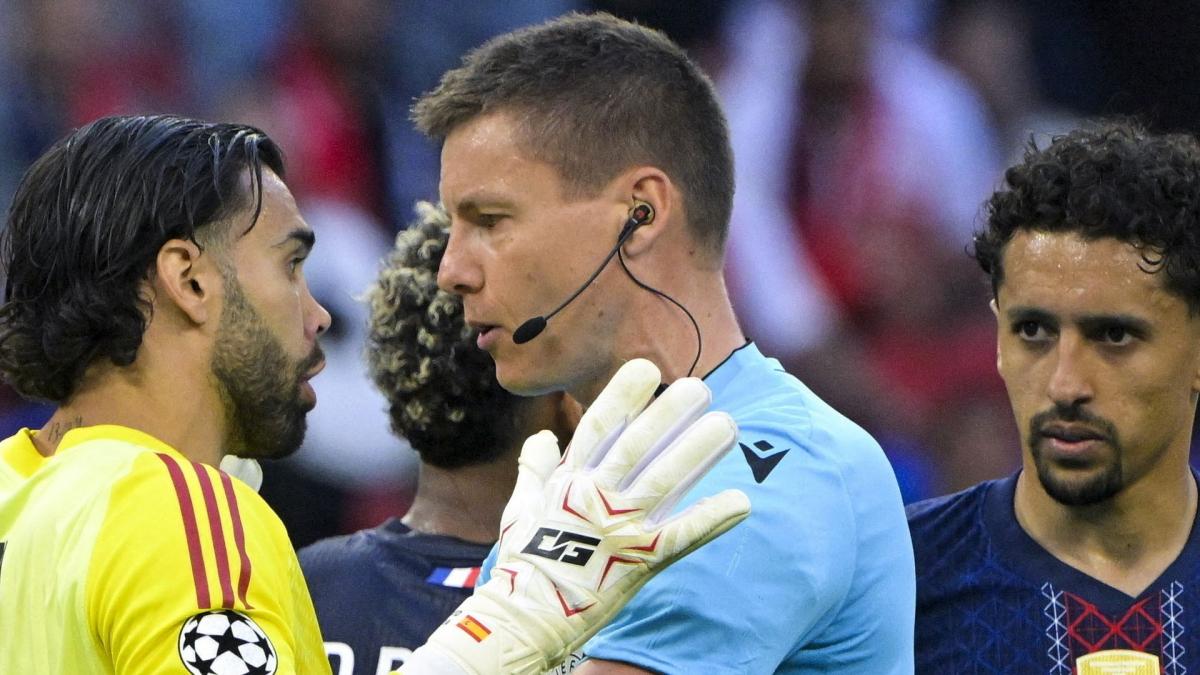
The 2026 UEFA Champions League final between Paris Saint-Germain (PSG) and Arsenal ended in a tense 1-1 draw, eventually concluding with a penalty shootout where PSG triumphed 4-3. However, the spotlight quickly shifted away from the players and onto the officiating, particularly the performance of referee Daniel Siebert. This choice has been met with criticism, especially from former Ligue 1 referee Gilles Veissière, who argues that UEFA made a poor decision in naming Siebert for such a crucial match.
### The Context of the Referee’s Appointment
Daniel Siebert had already officiated key matches for Arsenal earlier in the tournament, including their quarter-final against Sporting CP and the semi-final against Atlético de Madrid. This prior involvement raised eyebrows before the final, as many questioned the wisdom of appointing a referee with a noticeable history with one of the finalists. Veissière expressed concern over Siebert’s capability to remain impartial given his previous encounters with Arsenal, suggesting that such repeated exposure could lead to biased officiating.
### Veissière’s Critique: An Expert Opinion
Veissière voiced his concerns during a segment on RMC Sport, describing the situation as “heretical.” He pointed out that appointing a referee who had already led Arsenal under difficult conditions in prior rounds was a mistake by UEFA. According to Veissière, refereeing in high-stakes matches necessitates a cooling-off period, ensuring that any previous associations do not cloud a referee’s judgment. He stressed that having officiated the semi-final, Siebert was placed in a challenging position for the final, citing that it wasn’t ideal when alternatives exist.
### Analysis of Key Decisions in the Final
One of the pivotal moments in the match was a controversial penalty decision that Veissière criticized. He stated that the initial foul was committed by Arsenal’s Madueke and that the correct call would have been to award a foul in favor of PSG instead. This statement captures a sentiment among fans who felt that Siebert’s decisions negatively impacted the game’s outcome.
Veissière emphasized his belief that Siebert was “fed up” with the situation, highlighting that a referee must maintain composure in tense environments, particularly in finals. His comments reveal a deeper frustration with UEFA’s decision-making processes in appointing referees for such decisive matches.
### Conclusion: Lessons for UEFA
The fallout from this final emphasizes the importance of impartiality in officiating, especially in high-stakes tournaments like the UEFA Champions League. As the sport continues to evolve, UEFA must thoroughly evaluate its referee selection process to avoid future controversies. The focus should remain on ensuring fairness, allowing players to determine outcomes on the pitch rather than through questionable officiating decisions.
As debates around referee choices continue, it’s crucial for governing bodies to learn from these incidents. Addressing and refining the appointment process will be key to maintaining the integrity of the game, ensuring that fans and players can trust that crucial matches are officiated with the utmost fairness and expertise.