
Beware of ‘HEPA Type’: Understanding Air Purifier Acronyms
At first glance, buying an air purifier may seem straightforward, but the specifications can quickly become confusing, especially regarding filter types. It’s crucial to distinguish between HEPA filters and HEPA type filters, as they offer vastly different levels of filtration efficiency.
How a HEPA Filter Works
HEPA stands for High Efficiency Particulate Air, and it represents a stringent quality standard for filters. If an air purifier features a HEPA filter, you can trust that it has undergone rigorous testing to ensure its ability to retain various particles, including dust, pollen, mold, and even bacteria or viruses.
To delve deeper, bacteria typically measure between 0.5 and 5 microns, while viruses range from 0.02 to 0.3 microns. Genuine HEPA filters are required to capture at least 99.97% of particles sized at 0.3 microns, which is commonly regarded as the most challenging particle size to filter. If a filter doesn’t meet this standard, it cannot be labeled a HEPA filter, making it vital to scrutinize product descriptions closely.
What is a HEPA Type Filter?
When you encounter a HEPA type filter, the assumption might be that it meets the same high standards as a true HEPA filter. Unfortunately, this is a misconception. HEPA type filters are often labeled as such in more budget-friendly air purifiers and are commonly found in devices like robot vacuum cleaners. They do not undergo the same rigorous certification processes as genuine HEPA filters, and they may not even meet the European standards categorizing different types of HEPA filters. While they may trap larger particles and some allergens, their effectiveness is not guaranteed.
How Purifiers Work
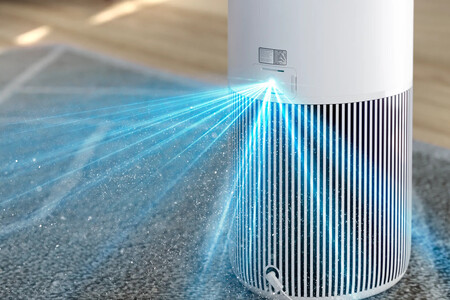
Air purifiers generally have a simple layout that includes a motor, a fan, and a housing for the filter. The motor drives the fan, which pulls in air and directs it through the filter.
However, the filtration process is multifaceted:
- Inertial Impact: Larger, heavier particles traveling quickly in the air collide with the filter fibers and become trapped.
- Direct Interception: Medium-sized particles come close to the fibers in the airflow and adhere upon contact.
- Brownian Diffusion: Smaller particles do not follow a straight path. Instead, they collide with gas molecules in the air, increasing the likelihood of hitting a fiber and becoming trapped.
While HEPA type filters are competent in retaining some particles, their lack of certification means they are generally less reliable than true HEPA filters.
Pros and Cons of HEPA vs. HEPA Type Filters
HEPA Filters
Pros:
- Superior ability to filter dust, bacteria, and viruses.
- Generally found in high-quality air purifiers that prioritize filtration.
Cons:
- More expensive, often associated with premium models.
HEPA Type Filters
Pros:
- Available in more affordable purifiers; suitable for devices where air purification is a secondary function.
Cons:
- Less efficient compared to true HEPA filters.
- May not effectively retain smaller particles.
What Purifier Should You Buy?
Choosing between a HEPA filter and a HEPA type filter depends on your air quality needs:
Opt for a HEPA filter if you aim to capture both large and small particles, ensuring cleaner air by filtering dust, bacteria, and viruses effectively.
Choose a HEPA type filter if your primary goal is to trap larger particles, such as pet hair and dust, without needing top-tier filtration efficiency.
Recommended Models
Here are a couple of recommended air purifiers featuring true HEPA filters:
Philips 2200 Series
The Philips 2200 Series is a compact air purifier equipped with a HEPA filter. Its three-layer system includes a prefilter, HEPA NanoProtect, and activated carbon, capturing 99.97% of particles as small as 0.003 microns. It is smartphone-compatible, allowing for effortless programming and includes the capability to filter out odors, bacteria, and viruses.
Dyson Purifier Hot+Cool HP1
The Dyson Purifier Hot+Cool HP1 is a well-known model featuring an H13 HEPA filter that captures particles down to 0.1 microns. This versatile purifier can also heat or cool the air, making it an excellent addition for year-round use.
In conclusion, understanding the differences between HEPA and HEPA type filters is critical when selecting an air purifier, as this knowledge can significantly affect your indoor air quality and overall health. Always remember to evaluate your needs and the specifications before making a decision.