
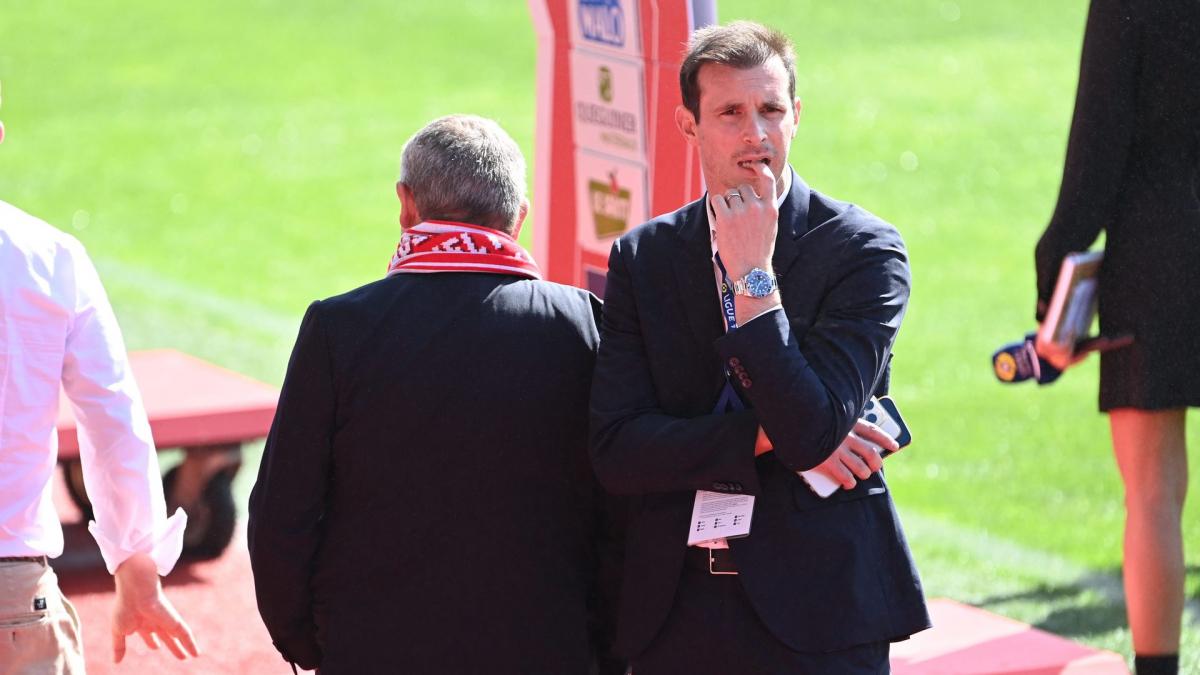
Grégory Lorenzi’s Appointment at Olympique de Marseille
Olympique de Marseille has officially appointed Grégory Lorenzi as their new sports director, succeeding Medhi Benatia. Lorenzi’s mission is clear: to restructure the club after a challenging previous season. His appointment comes after considerable deliberation and competition, primarily from OGC Nice, where he had initially agreed to terms, contingent on the club’s status in Ligue 1.
OGC Nice’s President Responds
The recent turn of events has provoked responses from OGC Nice’s president, Jean-Pierre Rivère. Following Nice’s retention in Ligue 1 after a decisive 4-1 victory against AS Saint-Étienne, Rivère took the opportunity to clarify the situation surrounding Lorenzi’s contract. He emphasized that the club had a signed agreement with Lorenzi allowing him to withdraw only if they were relegated to Ligue 2.
Rivère’s statements in the mixed zone clearly showcase his displeasure with how the situation unfolded. He remarked, “We couldn’t sign the contract straight away because we still had Florian Maurice with whom we were in harmony.” This comment highlights the professional conduct that Nice prides itself on.
The Contractual Dispute
The tension escalated when Lorenzi allegedly expressed his desire to accept Marseille’s offer just two weeks after agreeing to join Nice. Rivère recounted, “He comes to see me at the office and says, ‘President, I’m sorry, it’s the first time this has happened to me, but I’m going to take back my word and I’m choosing Marseille.’” This statement raises critical questions about the ethics of negotiation and contract honor in football.
Rivère firmly believes that Marseille’s actions were inappropriate, stating that they knowingly breached a contract. He emphasized, “Marseille knows very well that we have a contract with him.” This highlights the seriousness of contractual obligations in football, where the interplay of loyalty and ambition often leads to complex situations.
Future Discussions between OGC Nice and Marseille
Looking ahead, Rivère has expressed his intention to engage in discussions with Marseille. He stated, “When someone no longer wants to come to the club, we can understand and we will not try to keep them.” However, the existence of the contract complicates matters. Rivère’s commitment to rectify the situation indicates a potential fallout between the two clubs, which could have ramifications for future dealings.
His declaration that “these are not practices that are done” captures the essence of professional standards expected within the sport. It’s understood that when a player or director signs an agreement, both parties should honor their commitments unless circumstances genuinely warrant otherwise.
Conclusion
The saga of Grégory Lorenzi’s move from OGC Nice to Olympique de Marseille exemplifies the complex nature of football negotiations. With contractual obligations at the forefront, the discourse surrounding ethics, loyalty, and ambition continues to grow. As both clubs prepare for the upcoming season, the impact of this episode will likely resonate beyond just their immediate futures. Engaging in constructive dialogue could pave the way for improved relationships in the transfer market, but trust has undeniably been put to the test.