
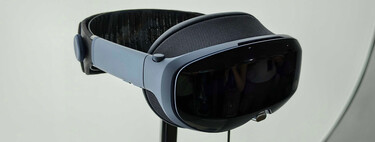
The Rise of Smart Glasses in Law Enforcement
Imagine a police officer navigating the bustling streets of Tianjin, China, equipped with smart glasses that provide real-time information and insights. What once seemed like a plot from a science fiction novel is rapidly transforming into a practical reality, reshaping the landscape of modern policing. According to China Daily, these innovative devices are now being utilized in various police operations, enhancing efficiency and situational awareness.
Smart Glasses: Revolutionizing Police Work
These smart glasses go beyond mere eyewear; they are part of an integrated system designed for seamless incorporation into everyday police routines. Developed as a part of China’s public security framework, they are deployed in three main areas: traffic management, patrols, and urban administration. This focused approach aims at immediate and practical applications of the technology.
An Invisible Aid for Officers
The functionality of these smart glasses transforms how law enforcement operates. They serve as an augmented reality interface that layers information onto the officer’s view. With capabilities such as text recognition and voice command interpretation, the glasses allow officers to conduct identity checks and retrieve relevant data about individuals without needing to step away from a scene. While these advancements indicate improvements in operational efficiency, they also raise significant concerns regarding privacy and surveillance.
Real-World Applications on the Ground
Zhao Baoxin, an officer stationed at Jiefang Road in Heping district, highlights a compelling real-world application. While on patrol, he encountered an elderly man unable to communicate clearly. The smart glasses aided in rapidly identifying the man, enabling authorities to contact his family and facilitate a safe return home within 20 minutes. This incident underscores the potential of smart glasses to act as critical tools in emergency situations.
Traffic Management Innovations
Another practical implementation of these glasses can be observed during peak school hours. Parents have the opportunity to pre-register their vehicle license plates via a mini-program, which syncs with the platform used by the glasses. This connection allows officers to identify authorized vehicles, manage temporary stops, and direct traffic effectively during busy periods. While efficient, such practices also normalize the automated reading of license plates, contributing to ongoing discussions about surveillance.
Impressive Metrics and Performance
Sun Yinghua, an agent in the Municipal Public Security Bureau, states that the recognition accuracy of this technology exceeds 95%, with systems designed to deliver instant results. Weighing only 40 grams, these glasses provide a first-person perspective, eliminating the framing issues common with traditional body cameras. However, they offer a limited battery life of 1.5 to 2 hours of continual use.
Background and Future Outlook
The concept of police smart glasses is not entirely new; earlier iterations featuring facial recognition technology appeared in China several years ago. Reports from 2018 indicate their use at Zhengzhou East station, allowing authorities to track fugitives and identify fraudulent activities during the immense travel season of Chunyun.
Today, as smart glasses gain traction, they represent a vital component of a broader technological ecosystem in policing. With potential future developments pointing toward integration with drones, robotic dogs, and intelligent vehicles, the efficiency offered by these devices continues to grow, even as debates regarding surveillance and ethical use deepen.