
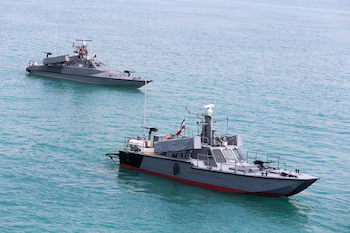
Missile Launches in a Fractured Ceasefire
Propaganda media affiliated with the Iranian Revolutionary Guard reported missile launches from southern Iran and subsequent explosions near the Strait of Hormuz . This aggressive action jeopardizes the tenuous ceasefire established between Tehran and Washington amid ongoing negotiations.
Recent accounts from the Fars and Tasnim agencies indicated that Iranian forces fired warning shots, potentially leading to maritime clashes in the Bandar Abbas area. The targets of the missile launches were described as “specific objectives,” although no details were provided about damage or impacts.
Incidents Trigger Heightened Tensions
Explosions and bursts of gunfire were audible in the vicinity of Bandar Abbas and the Strait of Hormuz, raising concerns among local residents. Reports of Iranian Navy warning shots aimed at vessels were published, yet the authenticity of these claims remains under scrutiny. These incidents occurred shortly after renewed discussions between Washington and Tehran regarding alleged ceasefire violations initiated in April.
The ongoing situation has amplified accusations between the U.S. and Iran. The United States recently denounced Iranian drone and missile attacks targeting its positions, while Iran retaliated by accusing Washington of conducting unauthorized military operations in the region.
Stalled Negotiations and Regional Implications
Indirect talks between the U.S. and Iran aim to extend a truce for an additional 60 days while addressing the Iranian nuclear program and facilitating the reopening of the Strait of Hormuz. However, no memorandum of understanding has yet been finalized, and existing differences remain unresolved. An Iranian source close to the negotiations declared that claims of a final agreement are unfounded until Tehran informs the Pakistani mediator.
Historically, the Strait of Hormuz has been a focal point of conflict, responsible for approximately 20% of global oil and gas trade prior to recent escalations. Following U.S. and Israeli actions against Iranian interests, Tehran has progressively limited maritime access in this critical waterway.
U.S. Military Operations and Regional Tensions
Recent reports suggest that U.S. military activities near Bandar Abbas were conducted in “legitimate defense” against Iranian threats. The Revolutionary Guard has promised retaliatory actions against U.S. military installations, although they have refrained from specifying targets hit. U.S. ally Kuwait has condemned Iranian missile attacks, labeling them as a “dangerous escalation.”
As the conflict intensifies, uncertainty looms over the lives of ordinary Iranians. Many citizens express feelings of despair regarding their quality of life amid ongoing hostilities. “Living here is hell,” lamented a Tehran hairdresser, capturing the deep-seated anxiety among the population.
Broader Regional Conflict and Civilian Impact
The situation in Lebanon also mirrors these increasing regional tensions. Israel has confirmed new airstrikes against Hezbollah positions in Beirut and Tyre, disregarding the previously established ceasefire. Recently, Lebanese authorities reported civilian casualties due to these attacks, illustrating the broader humanitarian impact of the ongoing conflict.
With active exchanges of fire and no formal agreement in sight between Washington and Tehran, the frequency of missile launches and explosions in the Persian Gulf suggests that the situation remains volatile and precarious.
(With information from Reuters, AFP, and EFE)