
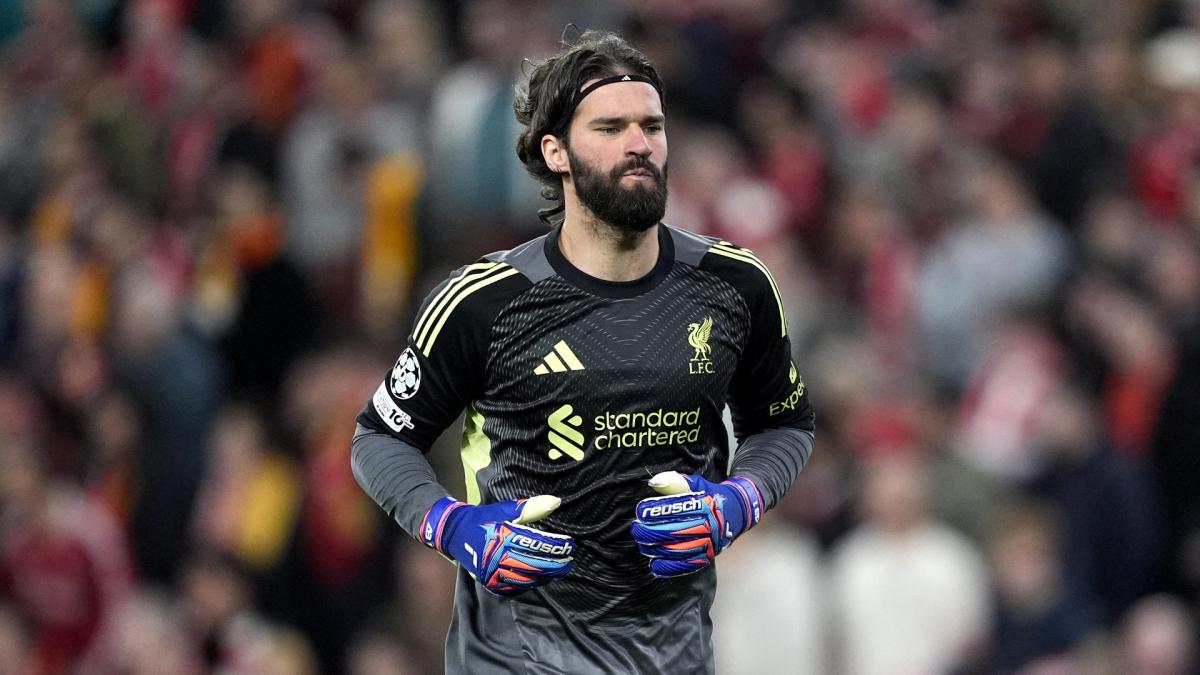
The Future of Alisson Becker at Liverpool
As Liverpool embarks on a significant restructuring phase after a season devoid of silverware, the future of goalkeeper Alisson Becker becomes a pivotal topic for fans and analysts alike. Amidst rumblings of potential departures and a shake-up in the squad, Alisson’s position remains secure for the immediate future.
Alisson Becker: A Stabilizing Force
Alisson, the seasoned 33-year-old Brazilian goalkeeper, has attracted interest particularly from Juventus in Italy. Despite these rumors, Liverpool’s internal assessment indicates that he is regarded as an integral part of their strategy for the coming season. According to Sky Sports, it appears unlikely that Alisson will depart from Anfield in the near future.
His impressive performances, especially in high-stakes matches, reinforce this view. The club’s management acknowledges that Alisson’s experience and skill provide a much-needed stabilizing influence in a team often in transition. As Liverpool reshapes its squad, retaining a reliable goalkeeper is essential, particularly to supervise a defense that is expected to evolve and adapt.
Prioritizing Stability Over Change
The Reds’ sporting management has made it clear that there are no immediate plans for Alisson’s exit. His contract status, coupled with his consistent high-level performances, makes him a desirable asset amidst the ongoing changes in the squad. With Liverpool focusing on rejuvenating their offensive line and addressing pressing needs elsewhere on the pitch, the priority seems to be maintaining continuity in goal.
Stability in goalkeeping can serve as a platform upon which other players can build their performances. This is especially true in a squad undergoing significant transformation; having a dependable figure like Alisson can help instill confidence in the defensive unit, which is set to undergo its own adjustments moving forward.
The Impact of a Changing Squad
After a campaign without trophy success, Liverpool recognizes the importance of swift yet calculated transitions within the squad. The choice to keep Alisson at the club, emphasizing continuity, suggests that Liverpool aims to create a strong foundation from which to build. While other positions may see an influx of new signings, the backbone of the team—led by a world-class goalkeeper—will likely remain unchanged for the foreseeable future.
The dynamics of team chemistry cannot be underestimated, particularly in a sport as fluid and fast-paced as football. Alisson’s leadership from the back not only aids defenders but also encourages a cohesive approach to gameplay, which will be vital as players adjust to new roles and tactics.
Conclusion
In the context of Liverpool’s ambitious plans and the ongoing reshuffle of their squad, retaining Alisson Becker emerges as a logical and strategic decision. His presence not only ensures stability in goal but also reinforces the team’s overall structure. As Liverpool aims to bounce back from a trophy-less season, keeping a reliable figure like Alisson can prove paramount for the club’s success in the coming years. The focus will now shift to balancing squad improvements while ensuring that core elements—like Alisson—remain integral to Liverpool’s identity on the pitch.