
Japan’s Shift Away from Post-War Military Restraints
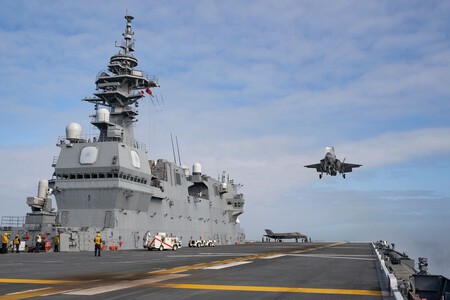
In 1945, Japan emerged from World War II with a new Constitution that, in practice, limited the country’s military capabilities, particularly regarding offensive operations. For decades, Japan navigated a tightrope of military constraints, but now the landscape is changing dramatically. One of its largest ships, the “Kaga,” is set to operate fighter jets from its deck alongside US Marines, indicating a significant departure from longstanding military taboos.
Breaking Historical Barriers
Japan is entering a military phase that it has historically avoided discussing openly. The “Kaga,” previously classified as a helicopter destroyer, will engage in joint exercises operating F-35B stealth fighters with the US Marine Corps. This move is more than operational; it symbolizes a break from ingrained political and historical barriers concerning Japan’s military capabilities. Although Tokyo continues to avoid the term “aircraft carrier,” the operational reality is shifting towards a more conventional structure of naval aviation.
Transformation of the “Kaga”
The transformation of the “Kaga” and its twin, the “Izumo,” has been a multi-year endeavor. Now, they are entering a critical phase where they are expected to operate fifth-generation fighter aircraft under real-world conditions. Planned exercises with US F-35B aircraft will involve cross-deck maneuvers, showcasing Japan’s capacity to facilitate complex operations with allied forces.
These developments require significant modifications to the ship’s infrastructure, including enhanced deck strength and thermal resistance for vertical landings. While the F-35Bs are placed under Japan’s Air Force control, this practical application nudges the country closer to having operational small aircraft carriers.
Responding to Regional Threats
The driving force behind this transformation is the deteriorating strategic environment in the Indo-Pacific. China’s increasing naval activity around Taiwan and the East China Sea, coupled with North Korea’s military provocations, has compelled Tokyo to reconsider its military posture. Japan’s focus is now on dispersing air capacity and reducing dependence on terrestrial bases that could be rendered vulnerable in conflict.
The advent of the F-35B plays a crucial role in Japan’s strategy, providing the ability to take off from short distances and land vertically, thus offering operational flexibility across its many islands.
The US’s Role in Accelerating Change
The involvement of the US Marine Corps in this transformation is crucial. Their participation underscores Washington’s role as an enabler of Japanese military modernization. The Marines executed the first landings on the “Izumo” in 2021, a pivotal moment that set a precedent for future collaboration. The “Kaga” has also traveled to the United States for live testing with F-35B fighter jets, reinforcing allied preparedness for regional crises.
A Broader Trend in the Indo-Pacific
This change in Japan’s capabilities reflects a broader trend of proliferation of light aircraft carriers among US allies, including the UK, Italy, and South Korea. These nations are restructuring their naval forces to maintain air power projections without depending on large nuclear supercarriers, adapting to current geopolitical realities.
The Real Test Ahead
Although much of Japan’s military advancements have been experimental, the true test lies ahead. Regular operations and sustained deployments will determine whether the “Kaga” can transition from being merely a “helicopter destroyer” to a fully operational light aircraft carrier. This transition signifies more than a military upgrade; it reflects a profound philosophical shift for Japan, moving away from a defensive military culture towards a more militarized and competitive stance in the Indo-Pacific.
Conclusion: A New Era in Japanese Military Strategy
As Japan gradually sheds its post-war military constraints, the actions prompted by China and North Korea’s aggressive postures are essential in shaping its defense policy. The implications of these changes extend beyond Japan, marking a significant alteration in the balance of power within the region.